Motorhome Insurance Repairs
Damage to a motorhome is rarely welcome.
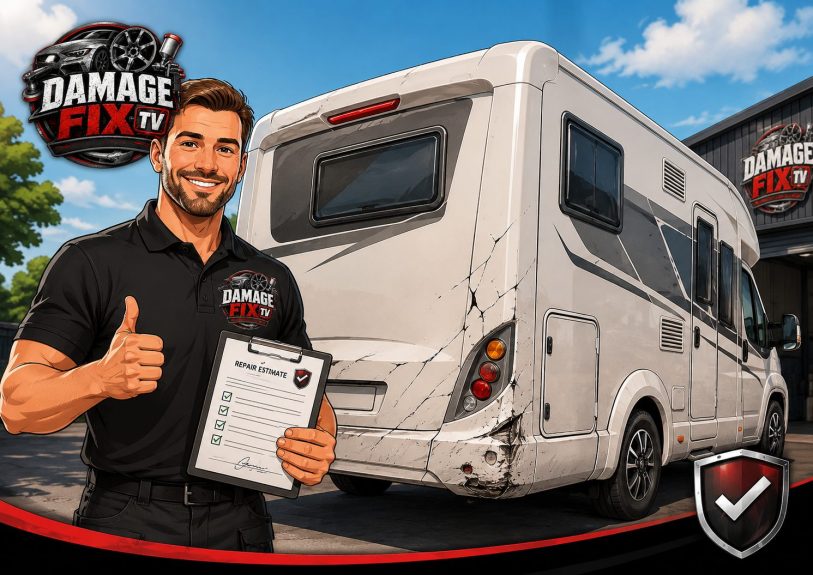
One minute you are enjoying the freedom of the open road. The next, you are examining a cracked rear corner, scratched side panel or damaged bumper and trying to remember exactly where the insurance documents are kept.
Motorhome insurance repairs can involve far more than ordinary vehicle bodywork. A single incident may affect GRP panels, moulded bumpers, side skirts, windows, lockers, decals, interior wallboard and the hidden mounting points behind them.
That is why choosing a repairer with genuine motorhome experience matters.
Damage Fix helps motorhome owners request insurance repair quotations from suitable mobile technicians and specialist workshop-based repair businesses throughout the UK.
Upload photographs, describe what happened and provide any claim details already supplied by your insurer. Suitable repairers can then assess the visible damage and explain whether the motorhome requires a mobile repair, workshop inspection or more extensive accident work.
Request a Motorhome Insurance Repair Quote
Send us clear photographs of the damage, the vehicle details and your location.
Upload Photos and Request Motorhome Insurance Repair Quotes
Photograph-based quotations may be provisional. Dismantling or inspection may reveal hidden cracks, broken supports, water ingress or damage behind panels.
What Is a Motorhome Insurance Repair?
A motorhome insurance repair is work carried out following damage that may be covered under a motorhome insurance policy.
Depending on the policy and cause, this may include:
- Collision damage
- Reversing accidents
- Storm and hail damage
- Falling branches
- Theft or attempted theft
- Malicious damage
- Fire or smoke damage
- Flood damage
- Accidental interior damage
- Damage while parked or in storage
- Damage caused by another vehicle
- Damage to GRP panels and mouldings
- Broken bumpers, skirts and corners
Insurance repairs can range from a local scratch or bumper repair to a substantial rebuild involving several body components and interior areas.
The process may involve:
- Reporting the incident
- Photographing the damage
- Preventing further deterioration
- Obtaining an estimate
- Insurer or assessor approval
- Booking the repair
- Inspecting hidden damage after dismantling
- Completing the approved work
- Providing invoices and repair records
The paperwork can sometimes appear more intimidating than the crack itself. Clear information and a detailed repair estimate make the process much easier.
What Motorhome Damage May Be Covered by Insurance?
Insurance cover varies between policies.
Potentially covered damage may include:
- GRP cracks
- Fibreglass fractures
- Rear bumper damage
- Corner moulding damage
- Side-skirt damage
- Wheel-arch damage
- Cab dents and scratches
- Painted-panel damage
- Roof damage
- Broken rooflights
- Window damage
- External locker damage
- Damaged decals and graphics
- Interior trim damage
- Worktop and furniture damage
- Water ingress caused by an insured incident
- Accident damage involving several panels
Insurance policies may distinguish between sudden accidental damage and gradual deterioration.
For example:
- A branch cracking the roof during a storm may be covered.
- A leak caused by neglected sealant over several years may not be.
- A rear bumper damaged during reversing may be accidental damage.
- A brittle bumper cracking through age alone may be treated as wear and tear.
The insurer makes the final decision according to the policy terms and evidence provided.
What to Do After Motorhome Damage
The steps taken immediately after an incident can affect both the repair and the insurance claim.
Make the vehicle safe
Do not continue driving if the motorhome has:
- Loose body panels
- Hanging bumper sections
- Damaged lights
- Broken mirrors
- Unsafe windows
- Exposed wiring
- Serious roof damage
- Steering or suspension concerns
- Significant water entering the vehicle
Contact the insurer or recovery provider if you are unsure whether the vehicle is safe to move.
Take photographs
Photograph:
- The complete motorhome
- Every damaged side
- The specific damaged area
- The surrounding location
- Another vehicle or object involved
- Interior damage
- Water marks
- Broken fittings
- Loose components
Take wide, medium and close-up images.
One photograph taken from two inches away may show a crack beautifully while providing absolutely no clue whether it is on the bumper, side skirt or bathroom sink.
Record the incident
Write down:
- Date
- Time
- Location
- What happened
- Weather conditions
- Other people or vehicles involved
- Witness details
- Police or incident reference where relevant
- Whether the vehicle remained driveable
- Any emergency work completed
Prevent further damage
Where safe, temporary action may be needed to:
- Cover a broken rooflight
- Protect a split panel
- Secure a loose moulding
- Prevent rain entering
- Remove a dangerous hanging section
Do not authorise permanent repair work before contacting the insurer if you intend to claim.
Contacting Your Motorhome Insurer
Report significant damage promptly.
Have the following information ready:
- Policy number
- Registration number
- Motorhome make and model
- Approximate age
- Vehicle location
- Incident date
- Cause of damage
- Photographs
- Third-party details
- Recovery requirements
- Whether water is entering
- Whether the motorhome is driveable
Ask the insurer:
- Is the damage potentially covered?
- What is the policy excess?
- Can I choose my own repairer?
- Do you require an assessor?
- How many estimates are needed?
- Can emergency weatherproofing proceed?
- Is transport to a workshop covered?
- Are replacement decals included?
- Is VAT included?
- Will you pay the repairer directly?
- What documents must be retained?
Keep the claim reference and the name of the person handling the case.
This is much more useful than later explaining that “someone in the claims department said it should be fine”.
Can You Choose Your Own Motorhome Repairer?
This depends on the insurer and policy.
An insurer may:
- Allow you to choose a repairer
- Recommend an approved workshop
- Arrange an independent assessor
- Require more than one estimate
- Offer a cash settlement
- Pay the repairer directly
- Reimburse you after completion
Where a repairer is chosen independently, confirm that the insurer will accept the estimate before work begins.
A suitable motorhome insurance repair specialist should ideally understand:
- GRP and fibreglass
- Composite body panels
- Plastic bumpers and skirts
- Large-area paintwork
- Decal reproduction
- Water ingress
- Interior surface repairs
- Large-vehicle workshop access
- Insurance estimates
- Hidden accident damage
A general car bodyshop may be excellent at repairing metal doors and bumpers but may not have the facilities or experience to repair a large coachbuilt motorhome.
What Should a Motorhome Insurance Repair Quote Include?
A detailed estimate should identify:
- Motorhome make and model
- Registration or vehicle reference
- Every visible damaged area
- Proposed repair method
- Replacement parts
- Labour
- GRP and fibreglass work
- Plastic repair
- Panel work
- Paint and materials
- Decals and graphics
- Removal and refitting
- Resealing
- Interior repairs
- VAT
- Estimated timescale
- Whether the estimate is provisional
- Guarantee details
The quotation should also explain where hidden damage may exist.
For example:
Estimate based on visible damage and subject to inspection after removal of the rear bumper and corner moulding.
That sentence does not mean the repairer is unsure what they are doing.
It means motorhomes are extremely good at hiding cracked brackets and damaged supports behind large decorative mouldings.
Photograph-Based Motorhome Insurance Estimates
Clear photographs may allow a repairer to provide an initial motorhome insurance repair estimate remotely.
This is useful where the vehicle is:
- At home
- In storage
- On a campsite
- At a dealership
- Awaiting recovery
- Far from a suitable workshop
- Temporarily unroadworthy
Photographs can help show:
- Damage position
- Vehicle size
- Panel construction
- Graphics
- Nearby fittings
- Access
- General severity
They may not reveal:
- Broken bumper brackets
- Cracks behind a moulding
- Distorted internal supports
- Hidden water ingress
- Previous filler
- Damage beneath decals
- Panel delamination
- Interior wall damage
An estimate may therefore remain subject to inspection or dismantling.
Motorhome Accident Insurance Repairs
Motorhome accidents can affect several different materials in one impact.
A rear-corner collision may damage:
- GRP corner moulding
- Rear bumper
- Side skirt
- Light cluster
- Internal brackets
- Rear panel
- Side wall
- Decals
A side impact may affect:
- Composite habitation panels
- Locker doors
- Windows
- Internal wallboard
- Furniture
- Lower mouldings
A cab impact may involve conventional vehicle bodywork as well as the motorhome conversion.
The complete damaged area should be assessed rather than simply the most visible crack.
Reversing Damage
Reversing accidents are among the most common motorhome insurance repair enquiries.
Large rear overhangs and limited visibility make the following areas particularly vulnerable:
- Rear bumpers
- Rear corners
- Light surrounds
- Side skirts
- External lockers
- Bike-rack mountings
A crack in the visible bumper may be accompanied by:
- Broken mounting tabs
- Bent brackets
- Damaged wiring
- Cracked lights
- Distorted adjoining panels
- Missing sections
Read our Motorhome Bumper Repair Guide.
Motorhome GRP Insurance Repairs
GRP is widely used in motorhome body construction.
Insurance-related GRP damage may affect:
- Rear corners
- Front mouldings
- Roof sections
- Over-cab sections
- Body panels
- Bumpers
- Side skirts
- Wheel arches
- External lockers
A proper GRP repair may include:
- Removing fractured material
- Reinforcing the laminate
- Rebuilding the shape
- Restoring mounting points
- Applying gelcoat or paint
- Colour matching
- Replacing graphics
Filler alone is not a structural repair where the fibreglass beneath has fractured.
Read our Caravan and Motorhome GRP Crack Repair Guide.
Motorhome Bumper and Corner Insurance Repairs
Replacement motorhome bumpers and corner mouldings can be expensive or difficult to source.
Repair may be practical where:
- The component remains mostly complete
- Missing sections can be reconstructed
- Mounting points can be restored
- Replacement parts are obsolete
- The original shape can be rebuilt
Replacement may be preferred where:
- Damage is extensive
- The material is severely brittle
- Large sections are missing
- A suitable new component is readily available
- Repair would not provide dependable strength
The repair estimate should include:
- Removal
- Hidden mounting damage
- Reinforcement
- Repainting
- Lights
- Wiring
- Decals
- Refitting
Motorhome Side-Skirt and Wheel-Arch Insurance Repairs
Side skirts and wheel arches are vulnerable to:
- Kerbs
- Levelling ramps
- Road debris
- Posts
- Reversing incidents
- Uneven ground
Insurance repair may involve:
- Plastic welding
- GRP reinforcement
- Rebuilding missing sections
- Repairing brackets
- Reshaping
- Painting
- Replacement
The repairer should check that the component is not being held under tension by a distorted mounting.
A beautifully repaired skirt will not remain beautiful for long if a broken bracket continues pulling it sideways.
Motorhome Cab Insurance Repairs
The cab section may be repaired using conventional vehicle body-repair methods.
Possible insured cab repairs include:
- Door dents
- Wing damage
- Bonnet damage
- Bumper damage
- Mirror damage
- Paint scratches
- Stone and impact damage
However, the conversion body may affect:
- Panel access
- Paint blending
- Component removal
- Graphics
- Workshop space
Where cab damage extends into the habitation body, a motorhome specialist may be more appropriate than a conventional car bodyshop.
Motorhome Painted-Panel Repairs
Painted motorhome panels may include:
- Metal cab panels
- Painted aluminium
- Painted GRP
- Plastic mouldings
- Previously refinished panels
Insurance repairs can involve:
- Scratches
- Scuffs
- Gouges
- Chips
- Abrasions
- Paint cracking
- Local dents
Older motorhome finishes may have faded, making paint matching more difficult.
The original colour code may need adjusting to match the vehicle as it appears today.
A brand-new factory shade may be technically correct while still looking wrong beside a fifteen-year-old panel.
Motorhome Decal Replacement
Graphics are often damaged during an accident or removed during repair.
The estimate should identify whether it includes:
- Original replacement graphics
- Reproduced decals
- A complete stripe
- Manufacturer logos
- Model names
- Removal of damaged adhesive
Matching older decals can be difficult because they may be:
- Faded
- Discontinued
- Cracked
- Shrunk
- Previously replaced
A larger section may need renewing to achieve a consistent result.
Storm and Hail Insurance Repairs
Storm damage may involve:
- Roof cracks
- Damaged rooflights
- Broken vents
- Hail dents
- Branch impact
- GRP fractures
- Water ingress
- Loose fittings
- Scratched panels
The roof should be inspected following significant hail or falling debris, even where the visible side damage appears modest.
A rooflight or seal may be damaged without being obvious from ground level.
Water Ingress Following Insured Damage
Water ingress may form part of an insurance repair where it results directly from a sudden insured event.
Examples include:
- A branch puncturing the roof
- A collision opening a panel joint
- Storm damage breaking a rooflight
- An impact cracking a corner seam
The insurer may distinguish this from gradual deterioration caused by poor maintenance or old sealant.
Document:
- The exterior opening
- Interior staining
- Damp wallboard
- Wet furniture
- Damaged flooring
- Temporary coverings
- Moisture readings where available
The repair may need to include:
- Exterior body repair
- Drying
- Insulation replacement
- Internal frame repair
- Wallboard restoration
- Resealing
- Furniture repair
Read Can Caravan Body Damage Cause Water Ingress?.
Theft and Attempted-Theft Damage
Attempted theft can damage:
- Cab locks
- Habitation doors
- Windows
- Locker doors
- Door frames
- Alarm fittings
- Interior trims
- Ignition components
A forced door may appear to need only a new lock while the frame, hinges and surrounding body have also been distorted.
Report theft and malicious damage to the police where required by the insurance policy.
Retain the crime or incident reference.
Fire and Smoke Damage
Fire damage may affect:
- GRP bodywork
- Plastic mouldings
- Windows
- Interior panels
- Wiring
- Gas systems
- Furniture
- Smoke-contaminated surfaces
Gas and electrical systems must be assessed by appropriately qualified specialists.
Even a small visible fire may create heat or smoke damage in hidden areas.
Motorhome fire repairs are generally more suited to specialist workshop inspection than mobile cosmetic work.
Mobile Motorhome Insurance Repairs
Some approved repairs can be completed at the motorhome’s location.
Possible mobile work includes:
- Small scratches
- Local paint damage
- Minor GRP repairs
- Small bumper cracks
- Interior surface damage
- Worktop repairs
- Shower tray repairs
- Limited skirt repairs
Mobile suitability depends on:
- Insurer approval
- Access
- Weather
- Electricity
- Safe working space
- Paint and overspray controls
- Amount of dismantling
Read our Mobile Caravan and Motorhome Repairs Guide.
When Is a Specialist Workshop Required?
Workshop repair is more likely where the job involves:
- Extensive GRP damage
- Several damaged body sections
- Bumper or corner removal
- Large paint areas
- Panel replacement
- Roof repairs
- Window removal
- Water ingress
- Interior reconstruction
- Several days of dismantling
- Insurance assessment
Not every bodyshop can accommodate a motorhome.
Confirm:
- Entrance height
- Entrance width
- Internal length
- Roof clearance
- Vehicle weight capacity
- Paint-booth size
- Secure storage
Read our Workshop Caravan and Motorhome Repairs Guide.
Insurance Excess and Private Repair
The insurance excess is the amount the policyholder may contribute towards an accepted claim.
For smaller repairs, compare:
- Estimated cost
- Policy excess
- Possible effect on premiums
- No-claims benefits
- Claim-history implications
- Repair timescale
A small scratch repair may be more economical to pay privately.
A rear-corner repair involving GRP, bumper reconstruction, lights and decals is more likely to justify a claim.
Damage Fix cannot decide whether an owner should claim. That depends on the policy and personal circumstances.
Obtaining a repair estimate provides the information needed to make an informed decision.
Cash Settlements
An insurer may offer a cash settlement instead of arranging the repair.
Before accepting, check:
- Whether VAT is included
- Whether hidden damage has been inspected
- Whether decals are included
- Whether the settlement closes the claim
- Whether the vehicle can realistically be repaired for the amount
- Whether further costs may arise after dismantling
A cash offer may look generous until the bumper is removed and reveals several broken brackets that were not visible in the original photographs.
Obtain a detailed estimate where possible.
When Is a Motorhome Beyond Economical Repair?
An insurer may declare a motorhome uneconomical to repair where the projected cost is high compared with its market value.
This does not necessarily mean that physical repair is impossible.
The calculation may consider:
- Vehicle age
- Market value
- Parts availability
- Labour
- Hidden water damage
- Salvage value
- Repair complexity
- Storage costs
Owners should ask:
- How was the valuation calculated?
- Were accessories included?
- Can comparable vehicles be supplied?
- Can evidence of condition be submitted?
- Is retaining the salvage possible?
- What category or record will apply?
Rare, upgraded or unusually well-maintained motorhomes may require additional evidence of value.
How Much Do Motorhome Insurance Repairs Cost?
Costs vary significantly.
Important factors include:
- Vehicle size
- Damage location
- GRP work
- Plastic repair
- Panel reconstruction
- Replacement components
- Paintwork
- Decals
- Access
- Dismantling
- Interior damage
- Water ingress
- Transport
- Workshop storage
- VAT
A local bumper crack may require a modest repair.
A rear-corner accident affecting the bumper, light cluster, GRP corner, side wall, brackets and graphics can become a substantial insurance job.
Why estimates can change
Dismantling may reveal:
- Broken brackets
- Internal cracking
- Distorted supports
- Damaged wiring
- Moisture
- Previous poor repairs
- Missing material
Additional work should be documented and approved by the insurer before proceeding.
How to Photograph Motorhome Insurance Damage
Useful photographs should include:
- The complete motorhome
- Every damaged side
- A medium-distance view
- Clear close-ups
- Angled views showing depth
- A ruler for scale
- Interior damage
- Water staining
- Nearby lights, lockers and fittings
- The incident location
- Wide images of the parking area
- Photographs of loose or broken parts
Do not discard damaged components until the insurer confirms they are not required.
Read our Guide to Photographing Caravan and Motorhome Damage.
How the Damage Fix Motorhome Insurance Quote Service Works
1. Tell us about the motorhome
Provide:
- Make
- Model
- Approximate year
- Registration
- Vehicle length where known
- Location
- Driveable condition
- Claim status
2. Describe the incident
Explain:
- What happened
- When it happened
- Which areas are affected
- Whether another person was involved
- Whether water entered
- Whether temporary repairs were completed
3. Upload photographs
Include wide, medium and close-up images of every damaged area.
4. Explain the insurer’s requirements
Tell us whether the insurer requires:
- One estimate
- Several estimates
- An assessor
- An approved repairer
- A written repair method
- A VAT breakdown
- Recovery or collection
5. Suitable repairers may respond
A repairer may:
- Provide an estimate
- Request more photographs
- Recommend inspection
- Offer mobile repair
- Recommend workshop repair
- Liaise with the insurer
- Produce supporting documentation
6. Review the estimate
Confirm whether it includes:
- All visible damage
- Labour
- Parts
- GRP work
- Plastic repair
- Paint
- Decals
- Dismantling
- Resealing
- Interior work
- VAT
- Collection
- Guarantee
Choosing a Motorhome Insurance Repair Specialist
Ask the repairer:
- Do you handle motorhome insurance repairs?
- Can you provide an insurer-ready estimate?
- Can your workshop accommodate my vehicle?
- Do you repair GRP and fibreglass?
- Can you restore bumper mountings?
- Do you repair interior damage?
- Can you reproduce decals?
- Will hidden damage be documented?
- Can you communicate with the insurer?
- What guarantee is provided?
- Can you show similar repairs?
A useful estimate should clearly describe the repair.
Be cautious where a quotation consists only of “repair motorhome bodywork” followed by a large total.
Frequently Asked Questions
Do I need a repair estimate before making a claim?
Not always. Report significant damage first and ask the insurer what it requires.
Can I choose my own motorhome repairer?
Possibly. This depends on the policy and insurer. Ask whether you can use a suitable specialist.
Can motorhome insurance repairs be completed at home?
Some localised approved repairs may be completed mobile. Larger accident, GRP, roof and paint repairs normally require a workshop.
Will insurance cover water ingress?
It may cover water ingress caused directly by a sudden insured incident. Gradual deterioration or maintenance failure may be excluded.
Can a cracked motorhome bumper be repaired?
Many bumpers can be repaired or reconstructed, including damaged mounting points. The material and extent of damage must be assessed.
Will insurance pay for decals?
Decals may be included where required to restore damage caused by an accepted claim. They should appear in the estimate.
What happens when hidden damage is found?
The repairer should document it and seek further insurer approval before completing additional work.
Is VAT included in a motorhome insurance estimate?
VAT should be shown clearly where applicable. Confirm this before submitting the estimate.
Can I pay privately rather than claim?
Yes. Owners often compare the estimate with their excess before deciding.
Can Damage Fix approve the claim?
No. Damage Fix helps collect and route quotation enquiries. The insurer remains responsible for claim approval.
Request Motorhome Insurance Repair Quotes
Motorhome insurance damage can involve a complex mix of:
- GRP
- Plastics
- Painted panels
- Bumpers
- Side skirts
- Windows
- Decals
- Interior surfaces
- Hidden mountings
Providing clear photographs and accurate incident details helps suitable specialists assess the repair more effectively.
Upload Photos and Request Motorhome Insurance Repair Quotes
Damage Fix can help route the enquiry to a mobile repair technician or specialist motorhome insurance bodyshop, while the insurer remains responsible for approving the claim and authorised costs.