


Alloy Wheel Repair Cost UK: How Much Should You Expect to Pay?
SEO title: Alloy Wheel Repair Cost UK | Refurbishment and SMART Repair Prices
Meta description: How much does alloy wheel repair cost in the UK? Explore typical prices for kerb damage, SMART repairs, powder coating, diamond-cut refurbishment, cracks and buckles.
Suggested URL slug: alloy-wheel-repair-cost-uk
How Much Does Alloy Wheel Repair Cost in the UK?
If you have caught an alloy wheel on a kerb, noticed peeling lacquer or discovered corrosion around the rim, one of your first questions will probably be: how much will it cost to repair?
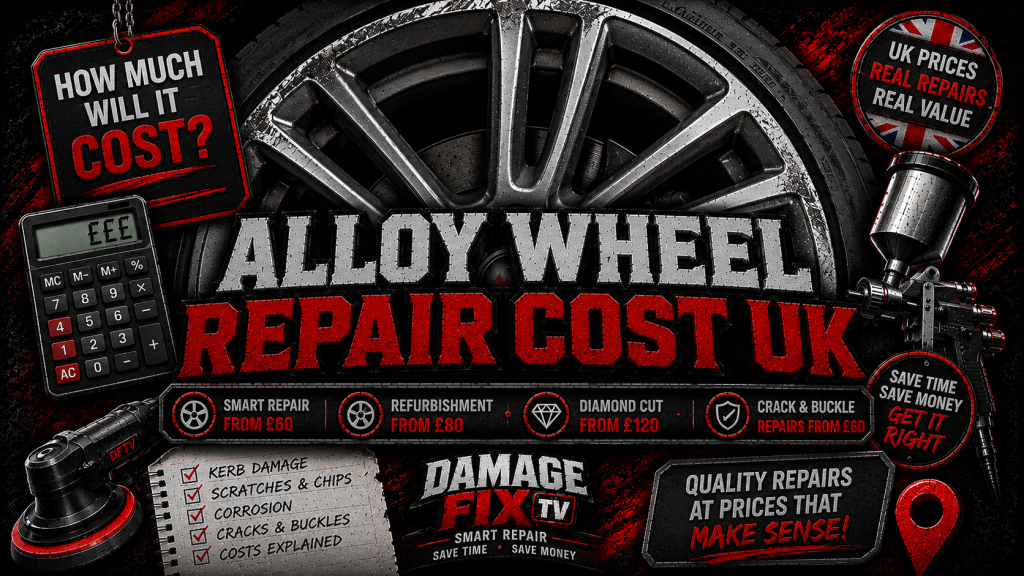
As a broad UK guide, alloy wheel repair can cost anywhere from around £60 for a small cosmetic repair to £150 or more for a diamond-cut refurbishment. Cracks, buckles, severe corrosion and unusually large wheels may cost considerably more.
Typical prices per wheel may look something like this:
| Type of alloy wheel repair | Indicative UK price |
|---|---|
| Small localised kerb-damage repair | £60–£100 |
| Painted alloy wheel refurbishment | £80–£120 |
| Powder-coated wheel refurbishment | £80–£120 |
| Diamond-cut alloy refurbishment | £120–£160+ |
| Alloy wheel colour change | £90–£150 |
| Wheel straightening | £60–£120+ |
| Alloy wheel crack welding | £60–£120+ |
| Corrosion or bead-seal treatment | £40–£100 extra |
| Four standard painted wheels | £280–£450 |
| Four diamond-cut wheels | £450–£650+ |
These figures are a starting point rather than a fixed price list. Wheel size, finish, damage and location can all affect the final quote.
At Damage Fix, this guide explains the different alloy wheel repair costs, what should be included in a quotation and how to decide whether repair, refurbishment or replacement offers the best value.
Why Do Alloy Wheel Repair Prices Vary?
Two wheels with similar-looking kerb marks may require very different repairs.
One may only have a small scrape on the outer edge and be suitable for a local SMART repair. Another may have corrosion spreading beneath the lacquer, requiring the complete wheel to be stripped and refinished.
The main factors affecting alloy wheel repair cost include:
- The size of the wheel
- The type of finish
- The depth and extent of the damage
- Whether the wheel is painted or diamond-cut
- Whether the complete wheel needs stripping
- The amount of corrosion present
- Whether the tyre must be removed
- Whether balancing is included
- Whether the wheel is cracked or buckled
- Whether a colour change is requested
- Mobile or workshop-based repair
- The number of wheels being repaired
- The repairer’s location and labour rate
- Whether VAT is included
An accurate quotation therefore needs more than a close-up photograph of one scratch. The repairer should ideally see the whole wheel and understand its size, finish and general condition.
Local SMART Alloy Wheel Repair Cost
SMART stands for Small to Medium Area Repair Techniques.
A SMART alloy wheel repair focuses on a localised damaged section rather than completely stripping and refinishing the entire wheel.
This method is commonly used for:
- Small kerb scuffs
- Scratches around the outer rim
- Minor paint chips
- Localised cosmetic damage
- Painted wheels in otherwise good condition
A small localised repair may cost around £60 to £100 per wheel.
The process may involve cleaning the wheel, sanding the damaged area, smoothing the kerb marks, applying primer, matching the wheel colour and applying protective lacquer.
A local repair is normally less expensive than full refurbishment because less of the wheel is being prepared and refinished.
However, it is only suitable when the remaining wheel finish is sound. Painting one small section over widespread corrosion or peeling lacquer is unlikely to provide a lasting result.
Full Alloy Wheel Refurbishment Cost
A full refurbishment normally involves treating the complete wheel rather than one small section.
Depending on the repairer and chosen process, the wheel may be:
- Removed from the vehicle
- Inspected for cracks and buckles
- Separated from the tyre
- Chemically stripped or blasted
- Prepared and repaired
- Primed
- Painted or powder coated
- Lacquered
- Cured
- Reassembled and balanced
A standard painted or powder-coated refurbishment will often cost around £80 to £120 per wheel.
Prices may be higher for large wheels, extensive corrosion, specialist colours or fast-turnaround services.
Full refurbishment is often better value than a local repair when several parts of the wheel are damaged or when the old coating is already failing.
Powder-Coating Alloy Wheel Cost
Powder coating is a popular method of fully refinishing alloy wheels.
The old finish is removed and a dry coloured powder is applied to the prepared wheel. The wheel is then heated so the coating flows and cures into a tough finish.
Powder-coating prices are commonly around £80 to £120 per wheel, although smaller wheels or four-wheel packages may work out slightly cheaper per wheel.
The final price may include:
- Wheel stripping
- Surface preparation
- Minor kerb-damage repair
- Primer and powder coating
- Protective finish
- Tyre removal and refitting
- Wheel balancing
Always ask what is included. A price that looks cheaper may not include tyre removal, replacement valves, balancing or VAT.
Diamond-Cut Alloy Wheel Repair Cost
Diamond-cut wheels have a bright machined face with fine lines visible beneath the lacquer.
Repairing them requires more than simply applying silver paint. The wheel is usually stripped, repainted and mounted on a specialist CNC lathe. A very thin layer of metal is removed to restore the machined surface before clear lacquer is applied.
A diamond-cut refurbishment will typically cost around £120 to £160 or more per wheel.
Diamond-cut repairs cost more because they require:
- Additional preparation
- Specialist machining
- CNC lathe equipment
- Skilled setup
- Precise removal of material
- Repainting of recessed sections
- New protective lacquer
Larger wheels, complex designs and extensive corrosion may increase the price further.
Can a Diamond-Cut Wheel Always Be Refurbished?
No. Diamond-cut wheels cannot be machined indefinitely.
Each time a wheel is recut, a small amount of metal is removed from its face. If the wheel has already been refurbished several times, there may not be enough material remaining for another safe cut.
Deep kerb damage may also require more metal to be removed than is considered acceptable.
In these cases, the repairer may recommend:
- Refinishing the wheel in a painted finish
- Powder coating the entire wheel
- Replacing the wheel
- Matching it as closely as possible to the other wheels
A professional diamond-cut specialist should inspect the wheel before confirming that another cut is possible.
Kerbed Alloy Wheel Repair Cost
Kerb damage is the most common reason for alloy wheel repair.
A light scrape around the outer rim may cost approximately £60 to £90 to repair locally. More extensive damage requiring a full refurbishment could cost £80 to £120 on a painted wheel.
Diamond-cut kerb damage is likely to cost more because the complete face may need machining.
The depth of the damage matters. A light surface scrape requires less preparation than a deep gouge that has removed metal from the rim.
Damage caused by a heavy kerb impact should also be checked for buckling or cracking rather than treated as purely cosmetic.
Mobile Alloy Wheel Repair Cost
Mobile alloy wheel repair can be carried out at your home or workplace when the damage is suitable.
This is usually intended for cosmetic kerb damage on painted alloy wheels. A mobile repair may cost around £70 to £120 per wheel, depending on wheel size, damage, location and the number of wheels being repaired.
Some repairers may charge a minimum call-out amount, meaning it can be more economical to repair two or more wheels during the same visit.
Mobile repair is convenient because:
- The repairer comes to you
- The car may remain at your home or workplace
- Minor repairs can often be completed in a few hours
- You may not need alternative transport
However, mobile repair is not normally the right choice for:
- Diamond-cut machining
- Widespread corrosion
- Severe lacquer failure
- Cracked wheels
- Buckled wheels
- Damage on the inner rim
- Complete chemical stripping
- Repairs requiring the tyre to remain off for an extended period
A good mobile repairer should be honest when workshop refurbishment would produce a better result.
How Much Does It Cost to Refurbish Four Alloy Wheels?
Repairing all four wheels together often reduces the average price per wheel.
A set of four standard painted or powder-coated wheels may cost around £280 to £450, depending on size, condition and finish.
A set of four diamond-cut wheels could cost approximately £450 to £650 or more.
The price may increase if:
- The wheels are 20 inches or larger
- Several wheels have heavy corrosion
- Specialist colours are requested
- Centre caps need painting
- New valves or TPMS components are needed
- Tyres must be replaced
- One or more wheels need straightening
- A fast-track service is requested
Ask whether the quote is for the complete set and whether tyre removal, balancing and VAT are included.
Is It Cheaper to Repair All Four Wheels Together?
It often is.
Repairers can sometimes offer a package price because the wheels are prepared, painted and cured together. This can reduce setup time and the cost per wheel.
Repairing all four also ensures the colour and finish are consistent.
One newly refurbished wheel may look noticeably fresher than three older wheels, particularly if the others have faded lacquer, minor scratches or previous repairs.
All four wheels may be worth refurbishing when:
- Every wheel has some kerb damage
- The finish is deteriorating across the set
- You want to change the colour
- The vehicle is being prepared for sale
- Previous repairs no longer match
- Diamond-cut corrosion is appearing on several wheels
If the remaining three wheels are genuinely in good condition, repairing only the damaged one may still be perfectly sensible.
Alloy Wheel Colour-Change Cost
Changing the colour of an alloy wheel normally involves full refurbishment.
Popular colour choices include:
- Silver
- Anthracite
- Gloss black
- Satin black
- Gunmetal
- Bronze
- Shadow chrome
- Custom manufacturer colours
A standard colour change may cost around £90 to £150 per wheel.
Special colours, multi-stage finishes, polished details or two-tone designs may cost more.
Before choosing a dramatic colour, consider how easy it will be to match if only one wheel needs repairing in the future.
Alloy Wheel Crack Repair Cost
Cracks are structural damage and should not be treated as a simple cosmetic repair.
A crack commonly appears on the inner rim following a pothole impact. It may cause a slow loss of tyre pressure or repeated tyre-pressure warnings.
Alloy wheel crack welding may start at around £60, but more involved repairs can cost £100 to £150 or more.
The final price depends on:
- The crack’s length
- Its position
- The number of cracks
- Whether the wheel is buckled
- Previous welding
- The condition of the surrounding metal
- Whether refinishing is required afterwards
Not every crack should be welded. Cracks around spokes, bolt holes or heavily stressed sections may make replacement the safer option.
The decision should be made by an experienced wheel specialist.
Buckled Alloy Wheel Repair Cost
A buckled wheel has become distorted, usually after hitting a pothole, kerb or road obstacle.
Possible signs include:
- Steering vibration
- Vibration through the seat
- Uneven tyre wear
- A slow air leak
- A visible flat spot
- The wheel wobbling when rotated
Wheel straightening may cost around £60 to £120 per wheel.
The price may be higher if the wheel is also cracked or requires refinishing after it has been straightened.
Some severely distorted wheels should not be repaired. The specialist should inspect the wheel and advise whether straightening is safe and worthwhile.
Alloy Wheel Corrosion Repair Cost
Corrosion may appear as bubbling paint, peeling lacquer, white marks or rough areas around the rim.
A small amount of surface corrosion may be removed during normal refurbishment. Heavy corrosion may require extra stripping, preparation or specialist treatment.
Some repairers charge an additional £40 to £100 per wheel for significant corrosion treatment.
Corrosion around the tyre bead may also cause a slow air leak. The tyre may need removing so the bead area can be cleaned and refinished.
A quick cosmetic repair over corrosion is unlikely to last. The affected coating must be removed properly before the wheel is repainted.
Alloy Wheel Lacquer Repair Cost
Lacquer protects the painted or diamond-cut surface.
If the lacquer is peeling in one very small area, local repair may be possible. However, lacquer failure often spreads beneath the surface, particularly on diamond-cut wheels.
When cloudiness or white corrosion marks affect a larger section, complete refurbishment is usually the better choice.
The cost will therefore depend on whether the problem is localised or whether the complete wheel needs stripping and refinishing.
Does Wheel Size Affect Repair Cost?
Yes. Larger wheels generally cost more to repair.
A 22-inch wheel requires more materials and equipment space than a 16-inch wheel. Large wheels may also be heavier, more complex and more likely to have low-profile tyres that require careful handling.
Some repairers charge an additional fee for wheels over a certain diameter.
When requesting a quote, provide the wheel size shown on the tyre sidewall or give the full vehicle registration so the repairer can check the specification.
Does the Tyre Need Removing?
It depends on the repair method.
A small mobile repair may be completed with the tyre protected and moved away from the wheel edge where possible.
For full refurbishment, the tyre will normally be removed. This allows the repairer to:
- Work around the complete rim
- Inspect the inner wheel
- Treat corrosion near the bead
- Check for cracks and buckles
- Apply a consistent coating
- Avoid painting the tyre
Ask whether tyre removal, refitting and wheel balancing are included in the price.
Some quotations appear cheap because these services are added separately later.
Are Valves and Wheel Balancing Included?
Not always.
A full refurbishment quote may include:
- Tyre removal
- New standard rubber valves
- Tyre refitting
- Wheel balancing
However, TPMS valves and pressure sensors can cost extra.
If your car has tyre-pressure monitoring sensors, ask how these will be handled. Older or corroded valve components may need replacing during the refurbishment.
Clarifying this before booking helps avoid unexpected additional charges.
Alloy Wheel Repair vs Replacement Cost
Repairing a cosmetic wheel is usually much cheaper than buying a replacement.
A new original-equipment alloy wheel may cost several hundred pounds, and wheels for premium or high-performance vehicles can cost considerably more.
Used wheels may be cheaper, but you should check:
- The correct part number
- Wheel diameter and width
- Offset
- Bolt pattern
- Centre bore
- Previous cracks or welding
- Buckles or hidden impact damage
- Whether the finish matches
Replacement may be the better option when:
- The wheel has severe structural damage
- There are several cracks
- A previous repair has failed
- The wheel is heavily distorted
- Another diamond cut is not possible
- Repair cost approaches replacement cost
- The specialist cannot guarantee a safe repair
Safety should always come before appearance or saving money.
DIY Alloy Wheel Repair Cost
DIY repair kits generally cost much less than professional refurbishment. A basic kit may cost around £20 to £50 and contain sandpaper, filler, primer, paint and lacquer.
DIY repair may improve minor cosmetic damage, but matching the original finish can be difficult.
Common problems include:
- Visible sanding marks
- Poorly shaped filler
- Incorrect silver colour
- Overspray
- Paint on the tyre
- Rough lacquer
- Repair edges remaining visible
- Painting over existing corrosion
- Missing hidden cracks or buckles
DIY products should only be used for cosmetic damage. A wheel that has suffered a significant impact should be professionally inspected.
Alloy Wheel Repair Before Selling a Car
Kerbed wheels can make a car look less cared for, even when its bodywork and interior are tidy.
Refurbishing damaged wheels may improve:
- Online advert photographs
- The car’s overall presentation
- Buyer confidence
- Dealer appraisal
- First impressions
- Negotiations over cosmetic damage
Whether it offers a financial return depends on the value of the vehicle and the severity of the damage.
Repairing one badly kerbed wheel can be worthwhile. Spending hundreds refurbishing every wheel on a very low-value vehicle may not increase the selling price by the same amount.
Alloy Wheel Repair Cost Before a Lease Return
Alloy wheel damage is a common concern at the end of a lease or PCP agreement.
The vehicle will normally be assessed against the provider’s fair wear and tear standard. Minor marks may be accepted, while larger areas of kerbing, missing paint, corrosion or structural damage may result in charges.
Before arranging a repair:
- Read the lease company’s wear-and-tear guide.
- Inspect and photograph all four wheels.
- Measure the damaged areas.
- Obtain a professional quotation.
- Compare the repair price with the likely return charge.
There is no benefit in paying to repair a mark that would be accepted. Equally, repairing obvious damage beforehand may cost less than the lease company’s charge.
Is Alloy Wheel Repair Covered by Insurance?
Standard motor insurance may cover wheel damage caused by an insured accident, but cosmetic kerb damage is not usually worth claiming for.
The cost of repairing one wheel may be lower than your insurance excess, and a claim could affect future premiums.
Separate alloy-wheel insurance policies are sometimes offered when buying or financing a car. These policies may cover certain types of cosmetic damage but often have limits, exclusions and claim restrictions.
Check the policy wording before assuming a repair will be covered.
How to Get an Accurate Alloy Wheel Repair Quote
Send clear photographs of the entire wheel rather than only the damaged section.
Useful photographs include:
- One image showing the complete wheel
- A close-up of the kerb damage
- An angled photo showing the depth
- Images of any peeling lacquer
- Photographs of corrosion
- A picture of the inner rim if visible
- The wheel size shown on the tyre
- Photographs taken in daylight
Also tell the repairer:
- The vehicle make and model
- Wheel diameter
- Whether the wheel is painted or diamond-cut
- How many wheels need repair
- Whether the tyre loses pressure
- Whether the wheel vibrates
- Whether it has been repaired before
A photograph can help with cosmetic pricing, but cracks, buckles and hidden damage may only become clear after the wheel has been removed.
Questions to Ask Before Booking
Before accepting a quotation, ask:
- Is this a local repair or full refurbishment?
- Is the wheel painted or diamond-cut?
- Will the tyre be removed?
- Is wheel balancing included?
- Are new valves included?
- Is VAT included?
- Will existing corrosion be removed?
- Are cracks and buckles checked?
- Is the colour matched to the other wheels?
- How long will the repair take?
- Is the work guaranteed?
- What happens if hidden damage is found?
- Are there any aftercare instructions?
A professional repairer should explain exactly what you are paying for.
Why the Cheapest Quote May Not Be the Best
A low-cost repair may be suitable for light damage, but quotations should be compared on a like-for-like basis.
One repairer may be quoting for a local cosmetic repair with the tyre left in place. Another may be quoting for complete stripping, tyre removal, powder coating, new valves and balancing.
Potential signs of poor repair work include:
- Paint over existing corrosion
- Visible sanding marks
- Colour mismatch
- Paint on the tyre or wheel nuts
- Rough or uneven lacquer
- Overspray
- Peeling soon after repair
- Corrosion returning quickly
- An obvious blend edge
Good preparation is one of the biggest factors in how long the finished repair will last.
Alloy Wheel Repair Aftercare
Freshly refinished wheels may need time to cure fully.
Follow the repairer’s advice and avoid using strong chemicals immediately after collection.
For ongoing care:
- Use a pH-neutral wheel cleaner
- Rinse away grit before brushing
- Use soft wheel brushes or wash mitts
- Avoid cleaning wheels while they are hot
- Remove brake dust regularly
- Avoid strong acidic cleaners
- Do not pressure wash very close to damaged lacquer
- Repair fresh chips before corrosion spreads
A wheel sealant or suitable ceramic coating may make cleaning easier, but it will not protect the wheel from kerb contact or pothole impacts.
Final Thoughts: How Much Should Alloy Wheel Repair Cost?
For a straightforward painted alloy wheel, most UK motorists should expect to pay somewhere in the region of £60 to £120 per wheel, depending on whether the work is localised or a full refurbishment.
Diamond-cut wheels are usually more expensive, often costing around £120 to £160 or more per wheel.
Crack welding, buckle straightening, corrosion treatment, oversized wheels and specialist finishes may all add to the final price.
The lowest quotation is not always the best value. Make sure you understand:
- What repair method is being used
- Whether the whole wheel is being treated
- Whether the tyre will be removed
- Whether balancing and valves are included
- Whether VAT is included
- Whether structural damage has been checked
At Damage Fix, our aim is to make vehicle repairs easier to understand before you spend your money. A clear quotation and an honest repairer should help you decide whether a SMART repair, full refurbishment or replacement wheel is the right choice.
Video Coming Soon
The video accompanying this guide will compare the costs of different alloy wheel repair methods using real-world examples.
It will cover:
- Local kerb-damage repairs
- Full painted-wheel refurbishment
- Powder coating
- Diamond-cut wheels
- Cracked and buckled wheels
- Mobile versus workshop repair
- Hidden extras in repair quotations
- When replacing a wheel is better value
Personal Industry Input Coming Soon
This section will include practical advice and personal observations from more than 30 years of experience in the SMART repair industry.
Future additions may include:
- Why cheap wheel repairs often fail
- How repairers calculate their prices
- When mobile repair is good value
- When full refurbishment is the honest recommendation
- Why diamond-cut wheels cost more
- Common quotation extras customers overlook
- How to inspect a repaired wheel
- When a cracked wheel should be replaced
Frequently Asked Questions
How much does alloy wheel repair cost in the UK?
A minor local repair may cost around £60 to £100 per wheel. Full painted or powder-coated refurbishment commonly costs approximately £80 to £120 per wheel.
How much does diamond-cut alloy repair cost?
Diamond-cut refurbishment normally costs around £120 to £160 or more per wheel because specialist machining is required.
How much does it cost to refurbish four alloy wheels?
A standard painted or powder-coated set may cost around £280 to £450. Four diamond-cut wheels may cost approximately £450 to £650 or more.
Is mobile alloy wheel repair cheaper?
Mobile repair can be cost-effective for small cosmetic damage. Prices often range from around £70 to £120 per wheel, although a minimum call-out charge may apply.
How much does a cracked alloy wheel cost to repair?
Crack welding may start near £60 but can cost £100 to £150 or more depending on the crack, wheel condition and additional refinishing required.
How much does wheel straightening cost?
Straightening a buckled wheel commonly costs around £60 to £120. Severe damage or cracks may increase the price.
Is powder coating more expensive than painting?
Prices are often similar for complete refurbishment. The final cost depends more on wheel size, preparation, colour and condition than on the coating alone.
Does alloy wheel repair include tyre removal?
Full refurbishment often includes tyre removal, refitting and balancing, but this is not guaranteed. Always check what is included in the quotation.
Is it cheaper to repair all four wheels together?
It often is. Some repairers offer package prices that reduce the cost per wheel, and refinishing all four at once provides a consistent appearance.
Should I repair alloy wheels before selling my car?
Repairing obvious kerb damage can improve the car’s presentation and first impression. Whether it is financially worthwhile depends on the vehicle’s value and the total cost.
Should I repair alloy wheels before a lease return?
Check the lease provider’s fair wear and tear guide first. Repairing damage outside the permitted standard may cost less than paying a lease-return charge.
Is it safe to repair a cracked alloy wheel?
Some cracks can be repaired by a specialist, but not every cracked wheel should be welded. The position, severity and overall condition must be assessed before repair.
Suggested Internal Links
- What Is a SMART Repair?
- SMART Repair Near Me
- Mobile SMART Repair Near Me
- Alloy Wheel Repair Guide
- Bumper Scuff Repair Guide
- Bumper Repair Cost UK
- Car Scratch Repair Guide
- Car Scratch Repair Cost UK
- Find a SMART Repairer
- Watch Damage Fix TV
