

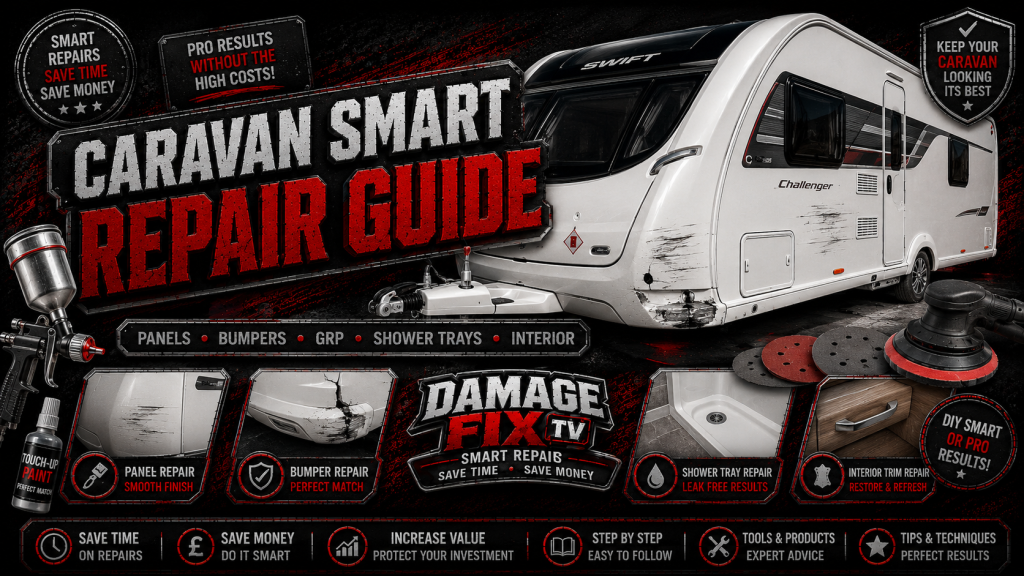
Caravan SMART Repair Guide: Bodywork, Panels, Bumpers and Interior Repairs Explained
What Is Caravan SMART Repair?
Caravan SMART repair is the use of localised repair techniques to restore smaller areas of damage without automatically replacing complete panels, bumpers, shower trays or interior fittings.
The term SMART commonly refers to Small to Medium Area Repair Techniques. Although it is often associated with cars, many of the same principles can be adapted for caravans.
Caravan SMART repairs may be suitable for:
- Scratched or scuffed body panels
- Minor dents
- Cracked plastic bumpers
- Damaged wheel arches
- Corner moulding damage
- Small areas of paint loss
- Interior trim scratches
- Cracked shower trays
- Worktop chips
- Floor and furniture damage
- Minor cosmetic damage before sale
The important point is that caravans are built differently from cars. Their outer panels, internal furniture, trims and structural systems require specialist knowledge.
At Damage Fix, this guide is designed to help caravan owners understand what can be repaired, which jobs need specialist attention and when replacement may be safer or more cost-effective.
Why Caravan Repairs Need Specialist Knowledge
A caravan may look straightforward from the outside, but its construction can be quite complex.
Depending on the make, model and age, a caravan may contain:
- Thin aluminium outer panels
- GRP or fibreglass panels
- Plastic front and rear mouldings
- Lightweight timber frames
- Composite wall sections
- Insulation
- Bonded internal furniture
- Decorative vinyl finishes
- Plastic shower trays
- Sealants and jointing systems
- Electrical wiring and gas equipment
A repairer must understand what lies behind the visible damage.
For example, a small dent in an aluminium panel may be purely cosmetic. Another mark may indicate crushed insulation, broken framing or water ingress.
A surface repair should never be used to hide structural or damp-related damage.
What Types of Caravan Damage Can Be Repaired?
Many forms of localised cosmetic damage can be repaired successfully.
Common caravan SMART repairs include:
- Scratches and scrapes
- Small dents
- Minor panel damage
- Cracked bumpers
- Damaged corner mouldings
- Wheel-arch repairs
- Paint and decal damage
- GRP cracks
- Plastic trim repairs
- Shower tray cracks
- Interior vinyl repairs
- Furniture scratches
- Worktop chips
- Small floor-surface repairs
The right repair method depends on the material, extent of the damage and whether the area has any structural or weatherproofing role.
Caravan Body Panel Repair
Caravan side panels are often made from thin textured aluminium or smooth GRP.
These materials do not behave in the same way as conventional steel car panels.
A small caravan panel repair may involve:
- Assessing the damage
- Checking for hidden structural problems
- Confirming that no water ingress is present
- Cleaning and preparing the area
- Reshaping or filling localised damage
- Recreating the panel texture where possible
- Colour matching
- Applying paint or protective finish
- Replacing or repairing decals if required
- Checking the surrounding seals
Local repair can often improve caravan body damage considerably, but texture and colour matching may make some repairs more challenging than ordinary car paintwork.
Smooth Caravan Panels vs Textured Panels
Not all caravan panels have the same finish.
Smooth Panels
Smooth painted aluminium and GRP panels can sometimes be repaired using methods similar to automotive SMART repair.
The area may be prepared, filled, primed, painted and blended into the surrounding finish.
Textured Panels
Textured aluminium panels are more difficult because the repairer must reproduce the original surface pattern.
A smooth repair on a textured panel may remain visible even if the colour is correct.
Specialist technicians may use texture moulds or reproduction techniques, but the final result will depend on:
- The original panel pattern
- Damage size
- Damage position
- Panel age
- Colour fading
- Previous repairs
- Access to matching materials
A professional repairer should explain whether a nearly invisible repair is realistic or whether some evidence may remain.
Can Caravan Dents Be Repaired?
Many smaller caravan dents can be improved or repaired.
The repair method depends on:
- Panel material
- Dent size
- Dent depth
- Surface texture
- Access behind the panel
- Whether the metal has stretched
- Whether internal framing is damaged
- Whether paint or coating is broken
Paintless dent removal is not always suitable for caravan panels because they are often extremely thin and may be bonded to insulation or internal structures.
Some dents can be reshaped. Others may require filling and refinishing.
A broad shallow dent may sometimes be easier to improve than a small sharp dent with stretched metal.
Caravan Scratches and Scuff Repairs
Caravan scratches may be caused by:
- Hedges and branches
- Narrow gateways
- Awning poles
- Storage accidents
- Other vehicles
- Cleaning equipment
- Luggage and bikes
- Road debris
- Contact with walls or posts
Light surface marks may polish out if they only affect the top finish.
Deeper scratches may require:
- Cleaning
- Sanding
- Filling
- Priming
- Colour application
- Lacquer or protective finish
- Decal replacement
If bare aluminium is exposed, the area should be treated correctly to prevent oxidation and further deterioration.
Caravan Front and Rear Panel Repair
The front and rear sections of many caravans are made from moulded plastic, ABS, GRP or another composite material.
Common damage includes:
- Cracks
- Splits
- Impact marks
- Scratches
- Stone chips
- Stress cracks
- Broken light surrounds
- Damaged corners
Some cracks can be reinforced and repaired from behind before the surface is refinished.
The repair method may include:
- Identifying the material
- Stabilising the crack
- Reinforcing the rear surface
- Bonding or plastic welding where suitable
- Reshaping the outer face
- Filling and smoothing
- Priming
- Colour matching
- Painting and finishing
Large cracks, missing sections or badly distorted panels may require replacement.
Caravan Bumper Repair
Caravan bumpers and lower rear panels are vulnerable to reversing accidents, storage damage and contact with posts or walls.
Repairable bumper damage may include:
- Scuffs
- Scratches
- Small cracks
- Splits
- Dents
- Broken mounting tabs
- Paint damage
- Localised distortion
A proper repair must address more than the visible surface.
If the crack is simply filled from the outside without reinforcement, it may quickly return.
The repairer should inspect:
- Bumper material
- Mounting points
- Light units
- Wiring
- Reflectors
- Brackets
- Surrounding body panels
Replacement may be better if the bumper is badly damaged or the repair cost approaches the price of a replacement part.
Caravan Wheel-Arch Repair
Wheel arches can suffer from stone damage, tyre failure, kerb contact and road debris.
Damage may include:
- Cracked plastic
- Missing sections
- Scratches
- Distortion
- Broken fixings
- Damage to surrounding bodywork
A tyre blowout can cause serious damage behind the visible wheel arch. It may affect:
- Floor sections
- Internal furniture
- Wiring
- Water pipes
- Insulation
- Body panels
After a tyre-related incident, a full inspection is important before cosmetic repair begins.
Caravan GRP and Fibreglass Repair
GRP, commonly known as fibreglass, is used in caravan front panels, rear panels, roof sections and moulded components.
Typical GRP damage includes:
- Surface scratches
- Cracks
- Chips
- Impact holes
- Stress fractures
- Delamination
- Gelcoat damage
A GRP repair may involve:
- Grinding and preparing the damaged section
- Reinforcing the rear
- Rebuilding missing material
- Applying resin and fibre
- Smoothing the surface
- Applying filler
- Priming and refinishing
Stress cracks may indicate movement beneath the surface. Simply painting over them may provide only a temporary improvement.
The cause should be identified before the cosmetic repair is completed.
Caravan Paint Colour Matching
Caravan colour matching can be challenging.
Even caravans that appear white may use many different shades, including:
- Brilliant white
- Cream white
- Warm white
- Blue-white
- Grey-white
- Off-white
Exposure to sunlight and weather can alter the original colour over time.
The repairer may use manufacturer information, colour-reading equipment and visual adjustment to create the best possible match.
The correct original colour code does not always guarantee an invisible match on an older caravan.
Blending and experience remain important.
Caravan Decal and Graphic Repairs
Many caravans use decorative decals and stripes across their body panels.
A scratch or panel repair may damage part of the graphic.
Possible solutions include:
- Reusing an undamaged section
- Sourcing an original replacement
- Having a replacement decal reproduced
- Replacing a complete stripe
- Matching the design with cut vinyl
- Removing faded graphics and replacing the full set
Older decals may have faded, making a new replacement look brighter than the surrounding graphics.
It may be necessary to replace a larger section to achieve a consistent appearance.
Caravan Awning-Rail Damage
Awning rails are fixed to the caravan body and form part of the weatherproofing system.
Damage may include:
- Bent rail sections
- Loose fixings
- Cracked sealant
- Impact marks
- Water ingress around the rail
This is not purely cosmetic.
An awning-rail repair may require:
- Removing the damaged section
- Checking the timber or structure behind it
- Replacing fixings
- Using suitable caravan sealant
- Realigning the rail
- Testing for leaks
Do not simply apply household silicone over a damaged caravan rail.
The wrong sealant may fail, trap moisture or make later repairs more difficult.
Caravan Sealant and Water Ingress
Any exterior caravan damage should be checked for water ingress.
Water may enter through:
- Cracked panels
- Failed sealant
- Damaged rails
- Window surrounds
- Roof joints
- Marker lights
- Corner mouldings
- Screw holes
- Poor previous repairs
Signs of water ingress may include:
- Damp smells
- Soft wallboards
- Staining
- Mould
- Swollen furniture
- Peeling wall covering
- Discolouration
- Increased moisture readings
A cosmetic repair should not be completed until the source of water ingress has been identified and corrected.
Painting over damp-related damage will not solve the underlying problem.
Caravan Damp Repair vs SMART Repair
SMART repair is intended mainly for localised cosmetic damage.
Damp repair may require far more extensive work, including:
- Removing internal furniture
- Replacing timber framing
- Renewing insulation
- Replacing wallboards
- Resealing external joints
- Treating mould
- Drying the structure
- Rebuilding damaged areas
A caravan with suspected damp should be assessed by someone experienced in caravan construction.
A cosmetic technician should not attempt to hide soft or rotten areas with filler and paint.
Caravan Shower Tray Repair
Cracked shower trays are common in caravans, particularly as the plastic ages and becomes brittle.
Damage may include:
- Hairline cracks
- Splits around the drain
- Cracks near corners
- Surface wear
- Discolouration
- Flexing
- Previous failed repairs
A specialist shower tray repair may involve:
- Assessing the crack and tray support
- Improving support beneath the tray where possible
- Cleaning and preparing the damage
- Reinforcing the crack
- Filling and smoothing the surface
- Applying a suitable specialist coating
- Allowing the repair to cure
- Checking for leaks
Repairing only the visible crack may not last if the tray continues flexing.
The cause of movement should be addressed wherever possible.
Can a Caravan Shower Tray Be Repaired Without Removal?
In many cases, yes.
Specialist repairers may be able to repair and refinish the shower tray in position, avoiding the time and cost of removing bathroom furniture.
Whether this is possible depends on:
- Crack position
- Tray condition
- Access
- Level of flexing
- Number of cracks
- Drain condition
- Surrounding wall panels
A badly deteriorated tray may still require replacement.
Caravan Interior Trim Repair
Caravan interiors contain lightweight decorative finishes that can be scratched or damaged easily.
Common repair areas include:
- Wallboards
- Cupboard doors
- Worktops
- Tables
- Vinyl surfaces
- Plastic trims
- Furniture edges
- Shower-room panels
- Flooring
- Seat bases
SMART interior repair may be suitable for:
- Small scratches
- Chips
- Minor holes
- Colour loss
- Surface scuffs
- Localised burns
- Damaged edges
- Small areas of delamination
Matching lightweight caravan furniture finishes can be difficult because many patterns are manufacturer-specific.
A repair may focus on making the damage far less noticeable rather than perfectly reproducing the original design.
Caravan Worktop Repair
Worktops can become chipped, burnt, scratched or cracked.
Repair options depend on whether the worktop is:
- Laminate
- Solid surface
- Lightweight composite
- Wood-effect board
- Plastic-coated material
Small chips and burns may be filled, textured and colour matched.
Large cracks, swelling or water-damaged sections may require replacement.
Before repair, the technician should check whether the damage is purely on the surface or whether the lightweight core beneath it has failed.
Caravan Floor Repairs
Caravan floor problems range from small cosmetic marks to serious structural delamination.
Cosmetic flooring damage may include:
- Small cuts
- Burns
- Scratches
- Torn vinyl
- Local staining
Structural floor problems may include:
- Spongy areas
- Delamination
- Water damage
- Rot
- Failed bonding
- Crushed insulation
A spongy caravan floor is not a normal SMART cosmetic repair.
It requires specialist assessment to identify whether injection repair, structural rebuilding or replacement is needed.
Caravan Furniture and Cabinet Repairs
Caravan furniture is designed to be lightweight.
It may use thin decorative boards, hollow sections and lightweight frames.
Common damage includes:
- Chipped corners
- Scratched doors
- Broken trim
- Loose hinges
- Damaged catches
- Delaminated surfaces
- Screw holes
- Impact damage
Minor cosmetic damage may be repaired using fillers, colour matching and grain reproduction.
Structural damage around hinges, bed supports or seat frames should be repaired properly rather than covered cosmetically.
Caravan Window Repairs
Caravan windows are often made from acrylic rather than ordinary glass.
Damage may include:
- Surface scratches
- Cracks
- Crazing
- Cloudiness
- Broken catches
- Damaged seals
- Delamination
Light scratches may sometimes be polished.
Cracked or badly crazed acrylic windows normally require replacement.
Using unsuitable solvents or household cleaners can damage acrylic and create further cracking.
Window-seal damage should be addressed promptly to reduce the risk of water ingress.
Caravan Roof Repairs
Roof damage can be caused by:
- Falling branches
- Hail
- Low trees
- Storage accidents
- Walking on unsupported areas
- Failed sealant
- Accessory installation
Even small roof damage should be taken seriously because of the risk of water ingress.
Roof repairs may involve:
- GRP repair
- Aluminium panel repair
- Sealant renewal
- Rooflight repair
- Awning-rail repair
- Accessory resealing
- Structural inspection
A local cosmetic repair is only appropriate after the roof has been checked for leaks and structural damage.
Mobile Caravan SMART Repair
Many caravan repairs can be completed at the owner’s home, storage site, campsite or dealership.
Mobile services may include:
- Panel scratches
- Minor dents
- Bumper repairs
- Plastic repairs
- GRP repairs
- Shower tray repairs
- Interior trim repairs
- Decal work
- Small paint repairs
Mobile repair can be very convenient because moving a damaged caravan may be difficult.
The repairer will usually need:
- Safe access around the caravan
- Permission from the site owner
- Electricity where required
- A dry working area
- Suitable temperature
- Shelter from wind and rain
- Enough space for equipment
Larger structural repairs may need workshop facilities.
Can Caravan Repairs Be Completed at a Storage Site?
Sometimes.
Before booking, check whether the storage operator allows commercial repair work on-site.
The site may have rules covering:
- Contractor access
- Insurance
- Electricity use
- Spraying and fumes
- Working hours
- Waste disposal
- Fire safety
- Vehicle movement
The repairer should also be able to work safely without affecting neighbouring caravans.
How Long Does Caravan SMART Repair Take?
Repair times vary considerably.
A small interior scratch may take less than an hour. A bumper crack or local panel repair may take several hours. A shower tray, GRP panel or complex body repair may take one or more days.
Factors affecting repair time include:
- Damage size
- Material type
- Texture matching
- Colour matching
- Drying and curing
- Decal replacement
- Access
- Weather
- Hidden damage
- Need for dismantling
- Water ingress
- Parts availability
Photographs can help with an initial estimate, but the final scope may only become clear after inspection.
How Much Does Caravan SMART Repair Cost?
Caravan repair costs vary according to the damage, material, access and method required.
A small scratch repair will normally cost less than a cracked front panel, shower tray or structural damp repair.
Price factors include:
- Damage size
- Panel material
- Smooth or textured finish
- Paint colour
- Need for texture reproduction
- Plastic welding or GRP work
- Decal replacement
- Mobile travel distance
- Site access
- Dismantling
- Hidden damage
- Damp testing
- Whether VAT is included
A repairer may provide an initial estimate from photographs but should make clear whether the price could change if hidden damage is found.
How to Photograph Caravan Damage for a Quote
Send clear photographs showing both the damage and its position.
Useful images include:
- A close-up of the damaged area
- A wider photograph of the full panel
- An angled image showing depth
- Photos of cracks and loose edges
- Images of surrounding rails and seals
- Interior photos behind the damaged area
- Pictures of any damp staining
- Approximate measurements
- Caravan make, model and year
- Vehicle identification details where relevant
For shower trays, photograph the complete tray as well as the crack.
For exterior damage, avoid taking photos only while the caravan is wet, as water can hide scratches and cracks.
Will a Caravan SMART Repair Be Invisible?
Some repairs can be extremely difficult to notice, particularly on smooth painted surfaces.
Other repairs may remain slightly visible due to:
- Textured aluminium
- Faded paint
- Old decals
- Difficult panel patterns
- Large cracks
- Previous repairs
- Material distortion
- Limited blending areas
A professional repairer should explain the likely result honestly.
The aim may be a virtually invisible repair, a strong cosmetic improvement or a structurally sound repair that remains slightly detectable.
DIY Caravan Repairs
DIY kits are available for scratches, GRP damage, plastic cracks, sealants and shower trays.
A minor improvement may be possible, but caravans present additional risks.
Common DIY problems include:
- Using household silicone
- Painting over damp
- Incorrect sealant
- Poor colour matching
- Failing to reinforce cracks
- Trapping water inside panels
- Damaging thin aluminium
- Repairing over structural problems
- Using rigid filler on flexible plastic
- Creating visible smooth patches on textured panels
- Sealing over drainage paths
- Applying resin incorrectly
- Hiding damage before sale
Any repair affecting gas, electricity, structural framing or weatherproofing should be completed by a competent specialist.
Caravan Sealants: Why the Correct Product Matters
Not all sealants are suitable for caravans.
Household bathroom silicone is often inappropriate because it may:
- Fail to bond properly
- Make later repairs difficult
- Trap moisture
- Contaminate paintwork
- Deteriorate outdoors
- Prevent correct resealing
Caravan manufacturers and repairers use specific non-setting bedding sealants, polyurethane products and other approved systems depending on the joint.
The old material may need removing before new sealant is applied.
Simply adding more sealant over a leaking joint is not always effective.
Caravan SMART Repair Before Selling
Visible damage can reduce buyer confidence.
Repairing a cracked bumper, scratched panel or damaged shower tray may improve:
- Advert photographs
- First impressions
- Buyer confidence
- Dealer valuation
- Part-exchange presentation
- Negotiations over condition
However, all repairs should be disclosed honestly where appropriate, particularly if the damage involved water ingress or structural work.
A cosmetic repair should never be used to hide significant damp or accident damage from a buyer.
Caravan SMART Repair Before Part Exchange
Dealers will normally consider:
- Body-panel condition
- Damp readings
- Interior wear
- Service history
- Tyres
- Appliances
- Windows
- Shower trays
- Bumpers and mouldings
- Previous repairs
A professional cosmetic repair may improve presentation, but damp and structural problems will still affect the valuation.
It can be useful to obtain both a repair quotation and a part-exchange valuation before spending money.
Caravan Insurance Repairs
Caravan insurance may cover damage caused by accidents, storms, theft or other insured events.
Whether to claim depends on:
- Repair cost
- Policy excess
- Type of damage
- No-claims implications
- Hidden damage
- Need for approved repairers
- Insurer authorisation
- Parts availability
Photograph the damage before attempting repairs.
Do not begin insured work until the provider has confirmed its requirements.
An insurer may request a formal estimate, inspection or approved workshop.
Choosing a Caravan SMART Repairer
Caravan repairs require different skills from ordinary car bodywork.
Before booking, ask:
- Do you regularly repair caravans?
- What material is the damaged panel?
- Is the damage cosmetic or structural?
- Have you checked for water ingress?
- Can the panel texture be reproduced?
- Will decals need replacing?
- Is the repair completed mobile or in a workshop?
- What result should I expect?
- Is the repair guaranteed?
- Is VAT included?
- What happens if hidden damage is discovered?
- What curing time is required?
- Can you show examples of similar work?
- Are you insured to work at my storage site?
Look for relevant caravan repair experience rather than relying only on examples of car repairs.
Why the Cheapest Caravan Repair May Not Be the Best
Caravan repair often involves thin materials, complex finishes and weatherproof joints.
A cheap surface repair may fail if the underlying cause has not been addressed.
Potential signs of poor workmanship include:
- Mismatched white paint
- Smooth patches on textured panels
- Cracks returning
- Visible filler sinkage
- Peeling paint
- Poorly matched decals
- Household silicone around joints
- Water ingress continuing
- Loose bumper sections
- Overspray
- Hidden damage left unrepaired
Good preparation and material knowledge are essential.
Caravan Repair Aftercare
Follow the repairer’s advice after the work is completed.
You may be asked to avoid:
- Washing the area immediately
- Applying pressure washers near the repair
- Using strong chemicals
- Towing before adhesives cure
- Walking on repaired roof areas
- Using a repaired shower tray too soon
- Applying polish or wax immediately
- Refitting accessories before curing
After exterior repair, inspect the area periodically for:
- Cracks
- Sealant movement
- Water staining
- Paint lifting
- Decal edges
- Loose fittings
Early attention to new problems can prevent larger repairs later.
Final Thoughts: Is Caravan SMART Repair Worth It?
For localised scratches, dents, cracked bumpers, GRP damage, shower trays and interior trim problems, caravan SMART repair can be a practical alternative to replacing complete components.
A simple guide is:
- Light surface scratch: Polishing may be enough.
- Deeper panel scratch: Local paint repair may be suitable.
- Minor aluminium dent: Specialist reshaping or refinishing may help.
- Cracked plastic bumper: Reinforcement and refinishing may be possible.
- GRP crack: Fibreglass repair may be required.
- Cracked shower tray: Specialist in-place repair may work.
- Interior trim chip: Local filling and colour matching may be suitable.
- Water ingress or structural damage: Full specialist assessment is essential.
- Badly damaged or missing panel section: Replacement may be more appropriate.
At Damage Fix, our aim is to help caravan owners understand their options before spending money.
A good repair should restore appearance, remain durable and, most importantly, avoid hiding structural, damp or safety-related problems.
Video Coming Soon
The video accompanying this guide will examine common caravan damage and explain how different repairs are approached.
It will cover:
- Caravan panel scratches
- Smooth and textured aluminium
- Small dents
- Plastic bumper repairs
- GRP and fibreglass damage
- Decal matching
- Shower tray repairs
- Interior trim restoration
- Water ingress warning signs
- Mobile caravan repairs
- Common DIY mistakes
- When replacement is the better option
Personal Industry Input Coming Soon
This section will include practical advice and honest observations from more than 30 years of experience in the SMART repair industry.
Future additions may include:
- Why caravan panels require different techniques from cars
- Common mistakes made on textured aluminium
- How caravan whites are colour matched
- Why cracks need reinforcement
- When a bumper can be repaired
- How shower tray flex causes repeat failure
- Why household silicone creates problems
- How to spot concealed damp
- When mobile repair is appropriate
- What customers should photograph for a quotation
- How to inspect a completed caravan repair
- When replacement is the more honest recommendation
Frequently Asked Questions
What is caravan SMART repair?
Caravan SMART repair uses localised techniques to repair smaller areas of bodywork, plastic, GRP or interior damage without automatically replacing complete parts.
Can caravan body panels be repaired?
Many scratches, small dents and localised areas of damage can be repaired. The method depends on whether the panel is aluminium, textured, painted or GRP.
Can a dented caravan panel be repaired?
Some caravan dents can be reshaped or refinished. Sharp dents, stretched aluminium and damaged framing may be more difficult.
Can caravan scratches be polished out?
Light surface marks may polish out. Deeper scratches exposing colour, primer or metal normally require a paint repair.
Can a cracked caravan bumper be repaired?
Many plastic bumper cracks can be reinforced, bonded or welded before refinishing. Severe damage or missing sections may require replacement.
Can GRP caravan panels be repaired?
Yes. Cracks, chips and holes in GRP can often be reinforced and refinished using specialist fibreglass repair methods.
Can a cracked caravan shower tray be repaired?
Many shower trays can be repaired and refinished in place. The support beneath the tray should also be checked to reduce future flexing.
Can caravan repairs be completed at home?
Many mobile specialists can work at homes, storage sites and dealerships, provided there is safe access and suitable working conditions.
Can caravan repairs be completed at a storage site?
Sometimes, but the storage operator must allow commercial contractors and repair work on the premises.
Can textured caravan panels be repaired invisibly?
Some repairs can be matched very closely, but reproducing the original texture can be difficult. The repairer should explain the likely finish.
Should caravan damage be checked for damp?
Yes. Exterior cracks, failed seals and damaged rails should be assessed for water ingress before cosmetic repair.
Can I use household silicone on a caravan?
It is generally not recommended. Caravan joints require products suitable for the material and type of seal.
Is caravan SMART repair cheaper than panel replacement?
It often is for localised damage. Replacement may be better when damage is severe or repair costs approach the price of a new part.
Should I repair caravan damage before selling?
Repairing obvious cosmetic damage may improve presentation and value, but structural or damp-related repairs must be disclosed honestly.
Will caravan insurance cover SMART repair?
It may cover damage caused by an insured event. Check the policy and obtain authorisation before work begins.
Suggested Internal Links
- What Is a SMART Repair?
- SMART Repair Near Me
- Mobile SMART Repair Near Me
- Plastic Bumper Repair Guide
- Paint Chip Repair Guide
- Dent Repair Guide
- Interior Trim Repair Guide
- Caravan Shower Tray Repair Guide
- Caravan Body Repair Cost UK
- Motorhome SMART Repair Guide
- Find SMART Repair Advice
- Find a Caravan Repairer
- Watch Damage Fix TV
