


Ceramic Coating for Cars Guide: Benefits, Limitations, Costs and Aftercare
What Is Ceramic Coating for Cars?
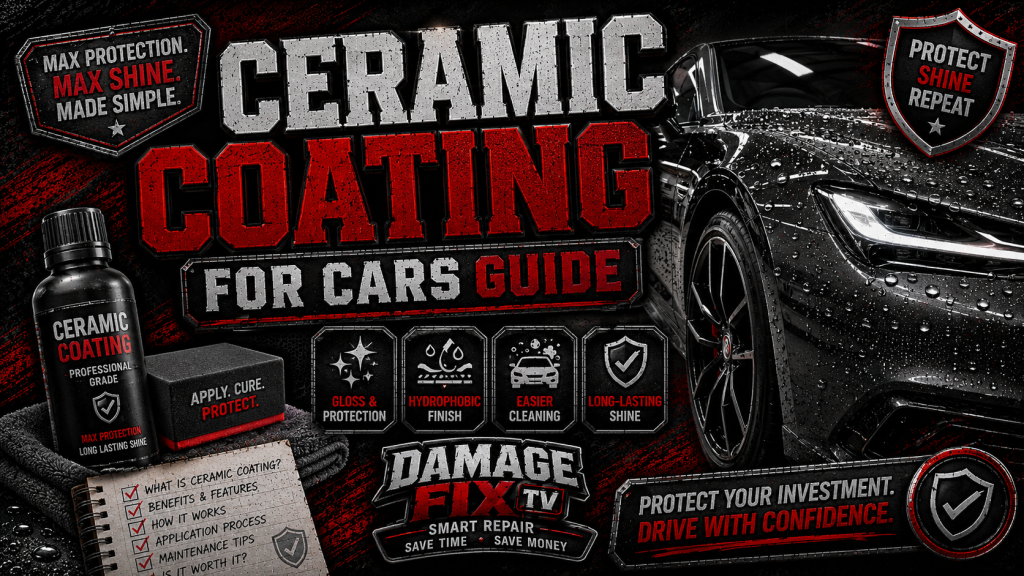
Ceramic coating is a liquid protective product applied to a vehicle’s painted surfaces. Once applied and allowed to cure, it forms a thin, transparent layer that bonds with the paintwork.
The coating is designed to help protect the vehicle from everyday contamination while making the paint easier to clean and maintain.
Ceramic coatings are commonly promoted for their:
- Water-repellent properties
- Gloss enhancement
- Chemical resistance
- Easier washing
- Protection against environmental contamination
- Longer durability than traditional waxes
- Reduced need for frequent polishing and waxing
However, ceramic coating is often misunderstood.
It does not make a car scratch-proof, stone-chip-proof or maintenance-free. It cannot repair damaged paint, remove scratches or prevent every type of deterioration.
At Damage Fix, this guide is designed to explain what ceramic coating genuinely does, what it does not do, how the application process works and whether it may be worthwhile for your vehicle.
How Does Ceramic Coating Work?
A ceramic coating is applied as a liquid and spread carefully across the vehicle’s paintwork.
The product then begins to bond and cure, creating a very thin protective layer over the clear lacquer.
Many coatings are based on silicon dioxide, commonly referred to as SiO₂, although formulas vary between manufacturers. Some products may also use other ceramic or polymer technologies.
Once cured, the coating changes the surface behaviour of the paint.
Water tends to bead or sheet away more easily, while dirt and contamination may find it harder to bond strongly to the surface.
The coating does not form a thick shell around the vehicle. It is a microscopic protective layer rather than a visible covering.
What Are the Main Benefits of Ceramic Coating?
Easier Vehicle Cleaning
One of the biggest practical benefits is easier washing.
Because the surface becomes more water-repellent and less welcoming to contamination, dirt may release more easily during a proper wash.
This does not mean the car cleans itself. It still needs regular washing, but the process may be quicker and less frustrating.
Improved Water Behaviour
Ceramic coatings are well known for hydrophobic behaviour.
Water may form tight beads and roll from the paint more readily. Some coatings are designed to encourage sheeting rather than dramatic beading.
Good water behaviour can make drying easier and help reduce water sitting across large painted surfaces.
Enhanced Gloss
A properly prepared and coated vehicle can look exceptionally glossy.
The coating can improve the clarity and depth of the finish, especially when paint correction has been completed beforehand.
However, much of the dramatic visual improvement often comes from the preparation and polishing rather than the coating alone.
Applying ceramic coating over swirls, scratches and dull paint will protect those defects rather than remove them.
Chemical Resistance
Ceramic coatings can provide greater resistance to certain chemicals than an unprotected paint surface.
This may help protect against:
- Bird droppings
- Insect residue
- Tree sap
- Road film
- Traffic contamination
- Mild acidic or alkaline cleaners
- Winter road salt
The coating provides additional time and protection, but contamination should still be removed promptly.
Strong chemicals and long-term neglect can damage both the coating and the paint beneath it.
UV and Weather Protection
Ceramic coatings can help reduce the effects of environmental exposure, including sunlight and weathering.
They should not be treated as complete protection against fading, but they can provide an additional protective barrier over the existing lacquer.
Reduced Reliance on Traditional Wax
A ceramic-coated car does not normally need conventional wax applied regularly.
The coating itself provides the main protective layer. Compatible maintenance products may be used to support its performance.
This can reduce the time spent applying short-lived protection after every few washes.
Protection from Light Contamination
A coating can reduce the chance of substances bonding strongly to the paint.
This can be useful for vehicles regularly exposed to:
- Motorway grime
- Industrial fallout
- Tree sap
- Bird droppings
- Insects
- Hard-water deposits
- Winter road contamination
Early and careful removal is still essential.
What Ceramic Coating Does Not Do
Ceramic coating is useful, but it is not magic.
It Does Not Make Paint Scratch-Proof
A coated vehicle can still be scratched.
Poor washing techniques, dirty sponges, automatic brush washes, rings, clothing, hedges and general contact can all mark the paint.
A ceramic coating may offer slight resistance to very light marring, but it cannot prevent physical damage.
It Does Not Stop Stone Chips
Stone chips are caused by physical impacts.
A thin ceramic coating cannot absorb the force of stones and road debris hitting the bonnet, bumper or wings.
Paint-protection film is better suited to reducing stone-chip damage.
It Does Not Remove Existing Scratches
Ceramic coating does not repair swirl marks, scratches, oxidation or sanding marks.
Paint correction must be completed before the coating is applied if these defects are to be improved.
It Does Not Prevent Dents
A ceramic coating cannot prevent parking dents, hail damage or impact damage.
It Does Not Make the Car Maintenance-Free
The vehicle still needs regular washing, drying and inspection.
Neglected ceramic coatings can become clogged with contamination and lose their water behaviour.
It Does Not Last Forever
Every coating has a limited lifespan.
Its durability depends on:
- Product quality
- Preparation
- Application
- Curing conditions
- Vehicle use
- Storage
- Washing methods
- Mileage
- Weather exposure
- Maintenance
Claims of three, five or more years are usually based on ideal application and proper ongoing care.
Ceramic Coating vs Car Wax
Car wax has been used for decades to add gloss and provide short-term protection.
Traditional wax usually sits on the surface of the paint and may last from a few weeks to several months, depending on the product and conditions.
Ceramic coatings generally offer:
- Longer durability
- Better chemical resistance
- Stronger water behaviour
- Less frequent reapplication
- Easier ongoing cleaning
Wax may still appeal to owners who enjoy detailing and prefer:
- Lower initial cost
- Easy application
- A warm glossy finish
- Frequent product changes
- Simple removal and reapplication
Ceramic coating is not automatically better for every owner. It offers longer-lasting protection but requires more preparation and careful application.
Ceramic Coating vs Paint Sealant
Paint sealants are synthetic protective products that generally last longer than traditional wax but less time than many professional ceramic coatings.
A sealant can be a practical middle-ground option.
It may offer:
- Good gloss
- Easier application
- Reasonable durability
- Lower cost
- Less demanding preparation
- Simpler correction if mistakes are made
Ceramic coating is normally chosen when longer protection and stronger surface performance are the priorities.
Ceramic Coating vs Paint-Protection Film
Ceramic coating and paint-protection film, commonly called PPF, serve different purposes.
Ceramic Coating Helps With:
- Gloss
- Water behaviour
- Chemical resistance
- Easier washing
- Environmental contamination
- Long-term surface protection
Paint-Protection Film Helps With:
- Stone chips
- Light physical impacts
- Road debris
- Scratches
- Damage to vulnerable painted areas
PPF is a much thicker transparent film physically applied over the paint.
Some owners combine both systems. PPF may be installed on high-impact areas such as the front bumper, bonnet and wings, with ceramic coating applied over the film and remaining paintwork.
Is Ceramic Coating Worth It?
Ceramic coating may be worthwhile if you:
- Plan to keep the car for several years
- Want easier maintenance
- Value a glossy appearance
- Wash the vehicle carefully
- Want longer-lasting protection than wax
- Own a new or well-kept vehicle
- Have recently had paint correction completed
- Drive a high-value or enthusiast vehicle
- Want to reduce ongoing detailing time
It may be less worthwhile if you:
- Rarely wash the car
- Regularly use automatic brush washes
- Expect complete scratch protection
- Want protection mainly from stone chips
- Are selling the car shortly
- Own a low-value vehicle with poor paintwork
- Do not want to follow coating aftercare advice
- Expect the vehicle to remain permanently spotless
The value of ceramic coating depends on expectations.
For many owners, easier washing and longer-lasting gloss are the most realistic benefits.
Should a New Car Be Ceramic Coated?
A new car can be a good candidate for ceramic coating, but new paint is not always perfect.
New vehicles may already have:
- Transport contamination
- Light swirl marks
- Dealer preparation marks
- Adhesive residue
- Rail dust
- Water spotting
- Fine scratches
- Poorly applied polish
The vehicle should still be inspected, decontaminated and prepared before coating.
Some new cars need only light polishing. Others may benefit from more extensive paint correction.
Applying coating without proper preparation can seal in existing defects.
Can an Older Car Be Ceramic Coated?
Yes.
An older vehicle can benefit greatly from ceramic coating if the paint is still in suitable condition.
Before application, the paint may need:
- Deep cleaning
- Chemical decontamination
- Clay treatment
- Tar removal
- Iron fallout removal
- Machine polishing
- Scratch repair
- Paint-chip repair
- Local SMART repair
Ceramic coating should not be used to hide poor paintwork. The preparation stage determines how good the finished vehicle will look.
Paint Preparation Before Ceramic Coating
Preparation is one of the most important parts of a successful ceramic-coating application.
A typical professional process may include:
Pre-Wash
Loose dirt and road film are softened and removed before physical contact with the paint.
Safe Contact Wash
The vehicle is washed carefully using suitable mitts, buckets and automotive shampoo.
Chemical Decontamination
Products may be used to remove:
- Iron fallout
- Tar
- Mineral deposits
- Insect residue
- Traffic film
Mechanical Decontamination
A clay bar or synthetic clay product may be used to remove bonded contamination.
Claying can introduce light marks, so polishing may be required afterwards.
Paint Inspection
The paint is assessed under specialist lighting.
The technician looks for:
- Swirl marks
- Scratches
- Oxidation
- Water spots
- Previous repairs
- Paint depth variations
- Stone chips
- Lacquer failure
Paint Correction
Machine polishing may be used to improve defects and restore gloss.
This can range from a light single-stage enhancement to a multi-stage correction.
Panel Wipe
Polishing oils and residue are removed so the coating can bond properly.
Final Inspection
The vehicle is checked carefully before the coating is applied.
What Is Paint Correction?
Paint correction is the controlled polishing of a vehicle’s clear lacquer to remove or reduce surface defects.
It may improve:
- Swirl marks
- Fine scratches
- Oxidation
- Water spotting
- Haze
- Poor previous polishing
- Light sanding marks
Paint correction does not simply cover scratches. It removes a very small amount of clear lacquer to level the surface.
This must be done carefully.
A professional may use paint-depth measurements and specialist lighting to understand how much correction is safe.
Paint correction is often responsible for much of the dramatic visual transformation seen in ceramic-coating photographs.
Does a Car Need Polishing Before Ceramic Coating?
Not every car needs heavy correction, but most vehicles benefit from some level of polishing before coating.
Even relatively new paint may have light defects or contamination.
Polishing can:
- Improve gloss
- Remove light swirls
- Clean the paint deeply
- Refine the surface
- Produce a more consistent finish
- Prepare the paint for coating
Applying coating over unpolished paint is possible if the surface is genuinely clean and defect-free, but this is less common than many owners expect.
Should Paint Chips Be Repaired First?
Yes, visible paint chips and scratches should ideally be assessed before ceramic coating is applied.
The coating will not fill or repair them.
Once the coating is applied, later paint repair may require the coating to be polished away from the affected area.
A sensible order is:
- Inspect the paint
- Repair dents where required
- Complete SMART paint repairs
- Treat chips and scratches
- Allow repairs to cure
- Polish the vehicle
- Apply ceramic coating
Fresh paint may need time to cure before coating. Follow the paint repairer’s advice.
How Is Ceramic Coating Applied?
The exact application method depends on the product.
A typical professional process includes:
- Preparing and polishing the paint
- Removing oils and residue
- Working in a clean, controlled environment
- Applying a small amount of coating to an applicator
- Spreading it evenly over a manageable section
- Allowing the product to flash
- Levelling the coating with suitable cloths
- Checking for high spots and streaking
- Moving systematically around the vehicle
- Allowing the coating to cure
- Applying additional layers where specified
- Inspecting the finish under different lighting
Timing is important.
If the coating is left too long before levelling, it may harden into visible high spots. If wiped too early or heavily, performance may be reduced.
What Are Ceramic-Coating High Spots?
High spots are areas where excess coating has not been levelled correctly.
They may appear as:
- Dark patches
- Rainbow marks
- Smears
- Oily-looking areas
- Uneven gloss
- Hardened streaks
Fresh high spots may sometimes be levelled with additional product or careful wiping.
Once fully cured, they may need machine polishing to remove.
This is one reason ceramic-coating application requires good lighting, patience and experience.
Can Ceramic Coating Be Applied Outdoors?
Some consumer coatings can be applied outdoors in suitable conditions, but a controlled indoor environment is generally preferable.
Outdoor application can be affected by:
- Wind
- Dust
- Insects
- Rain
- High humidity
- Low temperatures
- Direct sunlight
- Falling leaves
- Rapid product flashing
- Overnight moisture
Professional application is usually completed inside a clean workshop with controlled lighting and suitable temperature.
Mobile application may be possible in a garage or enclosed structure, but the conditions must be appropriate.
How Long Does Ceramic Coating Take to Apply?
The coating itself may only take several hours to apply, but the complete service can take much longer because of the preparation.
A straightforward new-car protection package may take one day.
A vehicle requiring extensive decontamination and paint correction may take two or more days.
The total time depends on:
- Vehicle size
- Paint condition
- Number of correction stages
- Coating system
- Number of layers
- Curing requirements
- Wheels and glass treatment
- Interior protection
- Workshop conditions
Do not judge a ceramic-coating service only by how quickly it can be completed. Preparation often takes far longer than application.
How Long Does Ceramic Coating Last?
Ceramic-coating durability can range from several months to several years.
A consumer spray coating may last months. A professionally applied coating may be marketed for two, three, five or more years.
Real durability depends on:
- Preparation
- Product quality
- Number of layers
- Mileage
- Outdoor storage
- Garaging
- Washing frequency
- Washing technique
- Road salt
- Chemicals
- Maintenance products
- Environmental conditions
A coating warranty may also require scheduled inspections or maintenance services.
Read the terms carefully rather than assuming the coating will perform for a fixed period regardless of how the car is treated.
Does Ceramic Coating Need Maintenance?
Yes.
Ceramic-coated vehicles still need regular washing and occasional decontamination.
Maintenance may include:
- Safe pre-washing
- pH-appropriate shampoo
- Careful hand washing
- Proper drying
- Removal of bird droppings
- Tar removal
- Iron fallout treatment
- Water-spot removal
- Compatible maintenance sprays
- Periodic professional inspection
The coating can become clogged with contamination. This may reduce water behaviour even when the coating remains present beneath it.
A maintenance wash or decontamination treatment may restore performance.
How Should You Wash a Ceramic-Coated Car?
A sensible maintenance wash may include:
- Rinsing loose dirt
- Applying a suitable pre-wash
- Rinsing thoroughly
- Washing with a clean mitt and suitable shampoo
- Working from cleaner areas towards dirtier areas
- Cleaning wheels with separate tools
- Rinsing the vehicle
- Drying with a clean microfibre towel or filtered air
- Applying a compatible maintenance product where appropriate
Avoid:
- Dirty sponges
- Automatic brush washes
- Washing in strong sunlight
- Letting shampoo dry
- Harsh chemicals used unnecessarily
- Scrubbing contaminated paint
- Dirty drying towels
- Household washing-up liquid
The coating makes washing easier, but safe technique still matters.
Can You Use a Pressure Washer?
Yes, a pressure washer can generally be used on a ceramic-coated vehicle.
Use sensible pressure and distance.
Avoid directing the nozzle very close to:
- Damaged paint
- Fresh repairs
- Stone chips
- Loose trims
- Decals
- Edges of paint-protection film
- Sensitive seals
A pressure washer helps remove loose contamination without physically rubbing the paint.
Can You Use a Car Wash?
Touchless car washes may be less likely to scratch than traditional brush washes, but they often use stronger chemicals.
These chemicals can reduce coating performance over time.
Automatic brush washes should generally be avoided because the brushes can introduce scratches and swirl marks.
A proper hand wash is usually the best option for maintaining a coated vehicle.
Can You Wax Over Ceramic Coating?
Traditional wax can be applied over some ceramic coatings, but it may change the coating’s water behaviour and surface characteristics.
Wax may also mask the performance of the coating beneath it.
It is normally better to use maintenance products recommended by the coating manufacturer or installer.
Ask the installer before applying wax, polish, sealant or ceramic spray products.
Can Ceramic Coating Get Water Spots?
Yes.
Hydrophobic coatings encourage water beading, but water droplets can still dry on the surface and leave mineral deposits.
Hard-water spotting may occur when:
- The car is washed in direct sunlight
- Water is allowed to dry naturally
- Sprinkler water lands on the vehicle
- Rain mixes with dirt and contamination
- Hard tap water is used
- The vehicle is not dried properly
Dry the car after washing and remove water spots promptly.
Severe mineral deposits can etch the coating or paint if left untreated.
Does Ceramic Coating Protect Against Bird Droppings?
Ceramic coating provides an additional protective barrier, but bird droppings should still be removed quickly.
Bird mess can be chemically aggressive, especially in warm weather.
It may stain or etch the coating and eventually affect the lacquer beneath it.
To remove bird droppings:
- Soften the contamination first
- Use a suitable automotive cleaner
- Avoid rubbing dry material across the paint
- Rinse thoroughly
- Inspect the surface afterwards
Never assume ceramic coating makes bird droppings harmless.
Does Ceramic Coating Protect Against Tree Sap?
It can make tree sap easier to remove and reduce how strongly it bonds to the paint.
However, sap should still be removed promptly using suitable products.
Old, hardened sap may require specialist treatment and can damage the coating if aggressive removal is needed.
Can Ceramic Coating Be Applied to Wheels?
Yes, specialist ceramic coatings are available for alloy wheels.
Wheel coatings can help with:
- Brake-dust removal
- Road-grime resistance
- Easier washing
- Chemical protection
- Gloss enhancement
Wheels face harsher conditions than bodywork, including heat, brake dust and strong cleaning products.
A dedicated wheel coating is often more suitable than a standard paint coating.
The wheels should be thoroughly cleaned, decontaminated and ideally removed for complete coverage.
Can Ceramic Coating Be Applied to Glass?
Specialist glass coatings are available for windscreens and windows.
They can improve water repellency and make glass easier to clean.
However, incorrect application can cause:
- Smearing
- Wiper judder
- Poor visibility
- Patchy water behaviour
Only products suitable for automotive glass should be used.
The windscreen must be prepared properly before application.
Can Ceramic Coating Be Applied to Plastic Trim?
Some coatings are designed for exterior plastic and trim.
They may help darken faded surfaces, improve water repellency and reduce future weathering.
The product must be suitable for the material.
Paint coatings should not automatically be applied to every type of textured plastic, rubber or trim.
Can Ceramic Coating Be Applied to Matt Paint?
Matt and satin finishes require specialist products.
Conventional polishing can alter the sheen and create shiny patches. Some coatings may also change the appearance.
Use a coating specifically approved for matt or satin paint, paint-protection film or wraps.
Test products carefully and seek specialist advice before application.
Can Ceramic Coating Be Applied Over Vinyl Wrap?
Some ceramic coatings are formulated for vinyl wraps and paint-protection film.
They may help with cleaning, water behaviour and contamination resistance.
The coating must be compatible with the specific finish, especially matt or satin wraps.
A standard paint coating may alter the appearance or be difficult to level on textured film.
DIY Ceramic Coating vs Professional Application
DIY Ceramic Coating
DIY coatings can offer good results when:
- The owner understands paint preparation
- The vehicle is in good condition
- A suitable indoor workspace is available
- Good lighting is available
- Product instructions are followed carefully
- The owner is confident with polishing and surface preparation
DIY coating may reduce cost, but mistakes can include:
- Coating over contamination
- Trapping scratches beneath the coating
- Leaving high spots
- Missing sections
- Applying too much product
- Applying in unsuitable weather
- Poor panel wiping
- Coating fresh paint too early
Professional Ceramic Coating
Professional application may offer:
- Detailed paint inspection
- Machine polishing
- Controlled working conditions
- Professional products
- Better lighting
- More consistent coverage
- Warranty options
- Maintenance advice
- Correction of existing defects
The installer’s preparation and skill are often more important than the brand name printed on the coating bottle.
How Much Does Ceramic Coating Cost?
Ceramic-coating prices vary considerably.
The final price depends on:
- Vehicle size
- Paint condition
- Level of paint correction
- Coating durability
- Number of layers
- Wheels and glass treatment
- Workshop quality
- Installer experience
- Warranty
- Geographic location
- VAT
A basic new-car package may cost much less than a full multi-stage correction and premium coating.
When comparing quotes, ask exactly what is included.
A cheap quote may involve limited preparation and a short-duration coating. A higher quote may include extensive polishing, wheel treatment and long-term maintenance support.
Questions to Ask a Ceramic-Coating Installer
Before booking, ask:
- What coating will be used?
- How long is it expected to last?
- What paint preparation is included?
- Is machine polishing included?
- How many correction stages are planned?
- Are paint-depth measurements taken?
- Will chips and scratches be identified first?
- Are wheels, glass and trim included?
- How long will the vehicle be kept?
- What curing time is required?
- Is the service completed indoors?
- Is there a warranty?
- Are annual inspections required?
- What maintenance products should be used?
- Is VAT included?
- What result should I realistically expect?
A professional installer should explain both the benefits and limitations clearly.
Ceramic-Coating Warranties
Some coatings include warranties lasting several years.
Read the terms carefully.
A warranty may require:
- Professional application
- Registration of the coating
- Annual inspections
- Maintenance washes
- Approved products
- Repair by the original installer
- Prompt reporting of problems
- Proof of service history
A coating warranty does not normally cover scratches, stone chips, accidents, poor washing or neglect.
Understand what the warranty actually provides before paying more for it.
Common Ceramic-Coating Myths
“Ceramic Coating Prevents All Scratches”
It does not. Poor washing and physical contact can still mark the paint.
“You Never Need to Wash the Car Again”
You do. The coating makes maintenance easier but does not remove the need for washing.
“Ceramic Coating Stops Stone Chips”
It does not. PPF is more appropriate for physical impact protection.
“The Coating Makes Bad Paint Look New”
It may add gloss, but proper paint correction is what improves scratches and swirls.
“More Layers Always Mean Better Protection”
Not necessarily. Some products are designed for one layer, while others use specific base and topcoat systems.
“The Hardness Rating Means the Car Cannot Be Scratched”
Marketing references to coating hardness do not mean the entire vehicle becomes scratch-proof.
When Should Ceramic Coating Be Removed?
A coating may need removing when:
- Paint repair is required
- High spots need correcting
- The coating has failed unevenly
- A different coating system is being applied
- Water spotting has etched the surface
- Paint correction is needed
- Bodyshop refinishing is planned
Ceramic coating is usually removed through machine polishing.
Strong chemicals alone may not remove a fully cured professional coating.
Ceramic Coating After SMART Repair
A repaired bumper, scratch or paint chip may be coated once the fresh paint has cured properly.
Do not apply ceramic coating immediately unless the paint repairer and coating manufacturer confirm it is safe.
Fresh paint may need time to release solvents and harden.
The coating should be removed from surrounding areas before paintwork begins, then reapplied after the repair has cured and been polished where appropriate.
Ceramic Coating Before Selling a Car
Ceramic coating can make a car look glossy and well maintained, but it may not always recover its full cost when the vehicle is sold.
Before selling, alternatives may include:
- Professional detailing
- Paint enhancement
- Short-term sealant
- Wax protection
- Local SMART repairs
- Interior cleaning
A full long-term ceramic package may make more sense when keeping the vehicle rather than selling it shortly.
However, a well-prepared coated vehicle may create a strong first impression and look better in advert photographs.
Ceramic Coating for Lease Cars
Ceramic coating can help make a lease car easier to maintain throughout the contract.
It may reduce the effort required to remove road grime and contamination.
However, it does not remove the need for:
- Careful washing
- Repairing scratches
- Fixing dents
- Refurbishing wheels
- Checking fair wear and tear
- Preparing the car before return
The financial value depends on the contract length and how carefully the vehicle will be maintained.
Final Thoughts: Is Ceramic Coating Worth It for Your Car?
Ceramic coating can be an excellent option for owners who want longer-lasting paint protection, stronger gloss and easier washing.
Its greatest benefits are usually:
- Easier maintenance
- Improved water behaviour
- Better resistance to contamination
- Long-term gloss
- Reduced reliance on wax
- Protection of properly prepared paint
Its limitations are equally important:
- It does not prevent stone chips
- It does not make paint scratch-proof
- It does not repair existing damage
- It does not remove the need for washing
- It requires proper preparation
- It needs ongoing maintenance
- It will eventually wear
At Damage Fix, our aim is to provide honest advice rather than repeat marketing claims.
The best ceramic-coating results come from realistic expectations, careful paint preparation, skilled application and proper aftercare.
Video Coming Soon
The video accompanying this guide will examine ceramic coating in real-world conditions and explain how the full process works.
It will cover:
- What ceramic coating is
- What it genuinely protects against
- Common coating myths
- Paint decontamination
- Paint correction
- Professional application
- DIY coating risks
- Water beading and sheeting
- Coating maintenance
- High spots
- Ceramic coating after SMART repair
- Ceramic coating vs wax and PPF
Personal Industry Input Coming Soon
This section will include practical advice and honest observations from more than 30 years of experience in the SMART repair and vehicle appearance industry.
Future additions may include:
- Why preparation matters more than coating marketing
- Common customer misconceptions
- How poor washing damages coated cars
- Why coatings do not prevent stone chips
- When paint correction is worthwhile
- How coating affects later SMART repair
- Common application mistakes
- How to inspect a freshly coated car
- When a cheaper sealant may make more sense
- Realistic coating durability in UK conditions
- How to maintain water behaviour
- Warning signs of a poor ceramic-coating service
Frequently Asked Questions
What is ceramic coating for cars?
Ceramic coating is a liquid protective product that cures into a thin transparent layer over vehicle paintwork. It helps with gloss, water behaviour, contamination resistance and easier cleaning.
Is ceramic coating worth it?
It can be worthwhile for owners who plan to keep their car, wash it carefully and value long-term gloss and easier maintenance.
Does ceramic coating prevent scratches?
No. It may offer limited resistance to very light marring, but the vehicle can still be scratched through poor washing or physical contact.
Does ceramic coating stop stone chips?
No. Ceramic coating is too thin to prevent stone-chip damage. Paint-protection film is better suited to impact protection.
How long does ceramic coating last?
Depending on the product, application and maintenance, ceramic coating may last from several months to several years.
Does ceramic coating make a car maintenance-free?
No. The vehicle still needs safe washing, drying and periodic decontamination.
Does a car need polishing before ceramic coating?
Most vehicles benefit from polishing before coating. Existing scratches and swirls will remain visible if they are not corrected first.
Can ceramic coating be applied to a new car?
Yes, but the paint should still be inspected, decontaminated and polished where required.
Can ceramic coating be applied to an older car?
Yes, provided the paint is prepared properly and any damage is repaired first.
Can you apply ceramic coating over scratches?
You can, but the coating will not remove them. It will protect the surface with the scratches still visible beneath it.
Can ceramic coating be applied after SMART repair?
Yes, once the fresh paint has cured according to the repairer’s advice. The coating may need removing and reapplying around future paint repairs.
Can I wax a ceramic-coated car?
Some waxes can be used, but they may alter the coating’s behaviour. Compatible maintenance products are normally preferable.
Can ceramic coating get water spots?
Yes. Mineral deposits can still form when water dries on the surface. Proper drying remains important.
Can ceramic coating protect against bird droppings?
It provides additional protection and may make cleaning easier, but bird droppings should still be removed promptly.
Can ceramic coating be applied to wheels?
Yes. Specialist wheel coatings can help make brake dust and road grime easier to remove.
Can I apply ceramic coating myself?
Yes, consumer coatings are available, but proper preparation, lighting, temperature control and careful levelling are essential.
Is professional ceramic coating better than DIY?
Professional application usually includes better preparation, paint correction, controlled conditions and installer support. DIY may still work well for experienced enthusiasts.
How should I wash a ceramic-coated car?
Use a suitable pre-wash, automotive shampoo, clean wash mitts and safe drying methods. Avoid automatic brush washes.
Suggested Internal Links
- What Is a SMART Repair?
- SMART Repair Near Me
- Car Scratch Repair Guide
- Car Scratch Repair Cost UK
- Paint Chip Repair Guide
- Plastic Bumper Repair Guide
- Lease Car Return Damage Guide
- Ceramic Coating Cost UK
- Ceramic Coating Aftercare Guide
- Paint Protection Film Guide
- Find SMART Repair Advice
- Find a SMART Repairer
- Watch Damage Fix TV
