Mobile Caravan & Motorhome Repairs
Taking a damaged caravan or motorhome to a workshop is not always easy.
The caravan may be tucked away in storage, the motorhome may be too large for a conventional bodyshop, or the damage may be localised enough for a specialist repairer to complete the work where the vehicle is already parked.
Mobile caravan and motorhome repairs may be carried out at your home, storage facility, dealership or another suitable location—provided the damage, access and working conditions allow the repair to be completed safely and professionally.
Damage Fix helps owners understand whether their damage is likely to suit a mobile repair or whether a specialist workshop would be the better option.
Upload photographs of the damage, show us where the vehicle is parked and tell us what happened. Your enquiry can then be matched with repairers offering suitable mobile or workshop services.
A mobile quotation also needs images of the parking area, working space and access. See our damage and mobile-location photography guide.
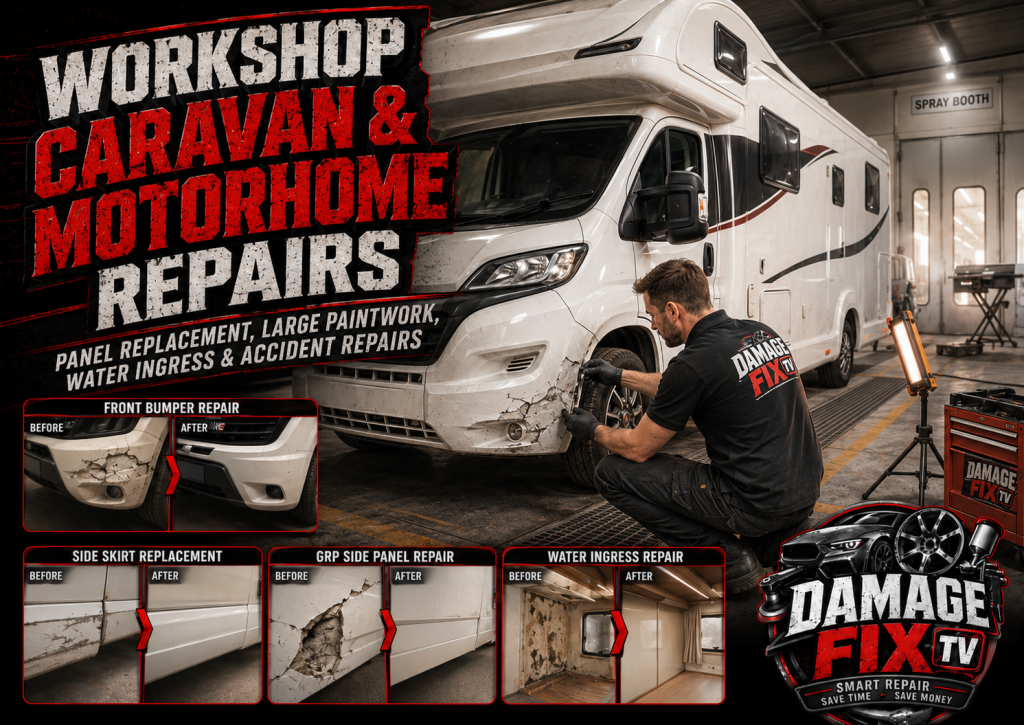
Looking for mobile caravan or motorhome repairs near you?
Upload photographs of the damage and the surrounding working area.
Upload Photos and Request Mobile Repair Quotes
Photograph-based estimates may be provisional. A repairer may need to inspect the vehicle or location before confirming whether the work can be completed on site.
What Is a Mobile Caravan or Motorhome Repair?
A mobile repair is carried out where the leisure vehicle is already located rather than at the repairer’s permanent workshop.
Depending on the repair business, this may include work at:
- The owner’s home
- A private driveway
- A caravan storage facility
- A motorhome storage site
- A caravan or motorhome dealership
- A holiday park
- A campsite, with permission
- A commercial fleet site
- Another repair or servicing business
Mobile repairers may operate from purpose-equipped vans carrying specialist tools, lighting, surface-repair products, GRP materials, plastic-repair equipment and localised paint-repair systems.
The word “mobile” describes where the technician works. It does not mean every repair can be completed outdoors with a small toolbox and an optimistic weather forecast.
Before accepting a mobile repair, the technician should consider:
- The type and extent of damage
- The material being repaired
- Access around the vehicle
- Weather conditions
- Temperature and humidity
- Electricity requirements
- Dust and overspray control
- The need for dismantling
- Whether the vehicle can be moved
- The proximity of other vehicles and property
A professional mobile repair should deliver an appropriate repair standard—not merely be the most convenient place to begin sanding.
What Can a Mobile Repairer Fix?
Mobile caravan and motorhome repairers may be able to help with selected exterior and interior damage.
Possible mobile caravan repairs
These may include:
- Caravan scratches and abrasions
- Small panel dents
- Awning-pole damage
- Localised textured-panel repairs
- Smooth-panel damage
- Small holes and punctures
- Corner mouldings
- Lower skirts
- Wheel arches
- External locker doors
- Plastic trims
- Interior wallboard
- Worktops
- Shower trays
- Sinks and washbasins
Possible mobile motorhome repairs
These may include:
- Bumper scuffs
- Localised bumper cracks
- Small GRP and fibreglass repairs
- Side-skirt damage
- Wheel-arch damage
- Painted-panel scratches
- Cracked plastic mouldings
- External lockers
- Interior trims
- Furniture surfaces
- Worktops
- Shower trays and sinks
Whether a repair can be completed mobile depends on more than its visible size.
A small crack may be straightforward where the surrounding material is stable and accessible. The same-sized crack could require workshop attention if it runs through mounting points, joins several panels or hides more extensive damage behind it.
Read our complete guides to:
Repairs at the Owner’s Home
Home-based repairs can save the inconvenience of towing a caravan or driving a large motorhome to a specialist workshop.
Mobile repairs at home may be particularly useful where:
- The caravan is stored on the owner’s driveway
- The motorhome is difficult to manoeuvre
- The damage is localised
- The vehicle is temporarily off the road
- The repair is entirely inside the vehicle
- Transporting the vehicle may worsen the damage
- The nearest suitable workshop is some distance away
What makes a suitable home repair location?
A good working area will usually provide:
- Off-road parking
- Firm and reasonably level ground
- Safe access around the damaged side
- Enough space for tools and equipment
- Access for the repair van
- Suitable lighting
- Electricity where required
- Shelter or room for a portable canopy
- Permission from the property owner
- Separation from pedestrians and passing traffic
The technician needs space to stand, kneel, operate tools and move around the repair.
If the damaged panel is four inches from a garden wall, the fact that the dent is clearly visible does not mean it is clearly repairable.
Driveway access
When requesting a quotation, explain:
- Whether the vehicle is on a driveway
- Which side is damaged
- How much space is available
- Whether the vehicle can be repositioned
- Whether the driveway slopes
- Whether there are height restrictions
- Whether the repair van can park nearby
Include wide photographs showing the complete parking area as well as close-ups of the damage.
Can a Mobile Repair Be Completed on the Road?
Repairs on a public road will not normally be suitable where they create a risk to the technician, other road users or nearby property.
Problems may include:
- Passing traffic
- Limited access
- Trailing electrical cables
- Dust
- Noise
- Overspray
- Parking restrictions
- Removal of body components
- Equipment obstructing the pavement or road
Some minor inspections or very limited work may be possible, but the repairer must decide whether the location is safe and lawful.
Where practical, the caravan or motorhome should be moved to private off-road space.
Repairs at Caravan Storage Facilities
Storage facilities are common locations for mobile caravan repairs, but the site operator’s permission should always be obtained before the appointment is booked.
A storage contract may restrict:
- Commercial visitors
- Body repairs
- Painting
- Sanding
- Generators
- Electrical equipment
- Chemical products
- Vehicle movement
- Working hours
Some storage sites provide a dedicated maintenance area. Others permit basic servicing but not cosmetic body repairs.
Ask the storage operator
Before arranging the repair, confirm:
- Are external repairers allowed?
- Is bodywork permitted?
- Is localised paintwork allowed?
- Can electrical equipment be used?
- Is mains electricity available?
- Can the vehicle be moved to an open area?
- Does the repairer need to provide insurance details?
- Are there access times or gate arrangements?
- Is a site fee payable?
- Are generators permitted?
Space between stored vehicles
Caravans and motorhomes are often parked closely together.
The repair may require:
- The vehicle to be moved
- A neighbouring vehicle to be relocated
- Access to a dedicated maintenance bay
- Temporary removal from the main storage row
Paintwork, sanding and GRP repairs should not be attempted immediately beside another vehicle without proper controls.
A small patch of overspray on somebody else’s caravan is unlikely to improve relations with the storage operator.
Photographs to provide
Include images showing:
- The complete vehicle
- The damaged side
- The gap to neighbouring vehicles
- The ground surface
- The route into the site
- The possible working area
- Any available electricity point
Mobile Repairs at Caravan and Motorhome Dealerships
Dealerships may use mobile repair specialists to prepare used stock, repair part-exchange vehicles and reduce workshop congestion.
Possible dealership repairs include:
- Caravan panel scratches
- Awning-pole dents
- Motorhome bumper repairs
- Side-skirt and wheel-arch repairs
- External locker damage
- Interior trim repairs
- Worktop damage
- Shower tray and sink repairs
- Paint chips and abrasions
- Minor delivery damage
Benefits to dealerships
On-site repair can reduce:
- Transport costs
- Vehicle movements
- Stock downtime
- Workshop waiting lists
- Delays preparing vehicles for sale
A repairer may also complete several smaller jobs during one visit.
Dealership requirements
A suitable dealership repair area should provide:
- Safe separation from customers
- Sufficient working space
- Vehicle access
- Electricity where agreed
- Suitable waste arrangements
- Permission for paint and preparation work
- Protection from dealership traffic
- A named person authorised to approve work
For multiple vehicles, the dealership should provide:
- Vehicle identification
- Clear damage instructions
- Repair priority
- Required finish standard
- Approval process for additional damage
- Agreed invoicing arrangements
Damage Fix can also accept multiple repair enquiries from caravan and motorhome dealerships, fleets and storage operators.
Repairs on Campsites and Holiday Parks
Mobile repairs on campsites may be possible where the site operator gives permission and the work will not create an unreasonable disturbance or safety risk.
The customer’s permission alone is not enough. The campsite or holiday park controls commercial activity on its land.
Campsite restrictions may cover
- Visiting repair vans
- Working hours
- Noise
- Electrical equipment
- Generators
- Paint spraying
- Chemicals
- Vehicle repairs
- Waste disposal
- Parking
Repairs that might be suitable
Depending on the site and conditions, possible campsite repairs may include:
- Small interior trim repairs
- Worktop chips
- Cupboard damage
- Shower tray assessment
- Sink repairs
- Limited exterior plastic repairs
- Small scratches
- Temporary weatherproofing
Repairs that are less likely to be suitable
Campsites are unlikely to be appropriate for:
- Extensive sanding
- Large paint repairs
- Significant GRP work
- Repairs generating strong fumes
- Major dismantling
- Work close to tents or public areas
- Repairs requiring several days
Seasonal pitches
A vehicle on a seasonal pitch may be surrounded by:
- Awnings
- Decking
- Furniture
- Fencing
- Storage boxes
- Skirting
- Planting
These items may prevent access to the damaged area and may need to be removed before the technician arrives.
When submitting an enquiry, include photographs of the whole pitch—not simply a close-up taken through the smallest available gap.

Mobile Caravan Body Repairs
Mobile caravan body repair can cover several types of localised panel damage.
Common enquiries include:
- Textured aluminium dents
- Smooth-panel damage
- Scratches
- Abrasions
- Small punctures
- Awning-pole impacts
- Damaged corner mouldings
- Lower-skirt cracks
- Locker-door damage
Textured aluminium repairs
Textured panels require specialist attention because the repairer must address both the shape and the embossed surface pattern.
The repair may involve:
- Stabilising the damaged area
- Reshaping or filling
- Reproducing texture
- Preparing the surrounding panel
- Localised refinishing
Weather and lighting can significantly affect this type of work.
Read our Caravan SMART Repairs Guide.
Mobile Caravan Dent Repair
Caravan dents are often caused by:
- Awning poles
- Storage accidents
- Gateposts
- Branches
- Reversing incidents
- Contact with equipment
Some localised dents may be suitable for repair at home or in storage.
The repairer will consider:
- Panel material
- Depth
- Creasing
- Stretching
- Texture
- Accessibility
- Proximity to windows and rails
- Whether paintwork is required
- Weather and space
A shallow dent in the centre of a panel may offer more options than a smaller dent beside an awning rail or window frame.
Read our Caravan Dent Repair Guide.
Caravan Scratch Repair at Home
A mobile caravan scratch repair may be possible where the working conditions allow proper preparation, colour matching and overspray control.
Scratches may affect:
- Paint
- Gelcoat
- Aluminium coating
- Plastic
- Decals
- Printed graphics
Some light marks may polish out. Deeper scratches may require:
- Filling
- Sanding
- Priming
- Painting
- Gelcoat repair
- Decal replacement
When home scratch repair may be difficult
The job may require workshop conditions where:
- The scratch is very long
- Several panels are affected
- Large graphics cross the damage
- Wind cannot be controlled
- Other vehicles are parked nearby
- A large paint blend is required
- The finish has faded significantly
Read our Caravan Scratch Repair Guide.
Mobile Motorhome Repairs
Some motorhome body and interior repairs can be completed without moving the vehicle.
Potential mobile motorhome repairs include:
- Bumper scuffs
- Small bumper cracks
- Localised GRP repairs
- Side-skirt damage
- Wheel arches
- Plastic mouldings
- Paint scratches
- External lockers
- Worktops
- Interior trims
- Shower trays
- Sinks
Why motorhome access matters
Motorhomes vary considerably in size.
The repairer may need to know:
- Vehicle length
- Vehicle height
- Body width
- Which side is damaged
- Available space around the vehicle
- Whether it can be repositioned
- Whether access steps are required
- Whether roof-level work is involved
A motorhome can be technically repairable while being physically unreachable in its current parking space.
Wide photographs are essential.
Motorhome Bumper Repair at Home
Motorhome bumpers can be expensive or difficult to replace, particularly on older vehicles.
Mobile repair may be possible for:
- Scuffs
- Scratches
- Small cracks
- Localised splits
- Minor missing sections
- Paint damage
What the repairer should inspect
The assessment should include:
- Bumper material
- Reverse-side access
- Mounting points
- Internal supports
- Lights
- Wiring
- Parking sensors
- Cameras
- Adjoining corners
- Overall distortion
A crack visible from the front may be accompanied by broken brackets behind the bumper.
This is why a photograph-based price may remain provisional until the technician inspects the reverse side.
When workshop repair is preferable
A workshop may be needed where:
- The bumper must be removed
- Several mountings are broken
- Large sections are missing
- The component is badly distorted
- Lights or wiring are damaged
- Extensive paintwork is required
- Adjoining body panels are affected
Read our Motorhome Bumper Repair Guide.
Mobile GRP and Fibreglass Repairs
Small motorhome GRP repairs may sometimes be completed on site.
Suitable examples may include:
- Localised surface cracks
- Chipped gelcoat
- Small holes
- Minor corner damage
- Limited impact fractures
- Scraped mouldings
A mobile GRP repair may require:
- Dry weather
- Appropriate temperature
- Stable material
- Access to the reverse side
- Dust control
- Ventilation
- Several curing stages
- Protection from contamination
Cold, rain and humidity can affect resin, filler and coatings.
A repair that requires multiple curing stages may not be suitable on an exposed driveway in winter—regardless of how encouraging the morning forecast looked.
Large GRP cracks, structural movement and extensive missing sections are more likely to need workshop facilities.
Read our Motorhome GRP and Fibreglass Repair Guide.
Mobile Interior Repairs
Interior repairs are often well suited to mobile work because the technician can work inside the vehicle, away from most weather problems.
Possible repairs include:
- Worktop burns
- Worktop chips
- Screw holes
- Cupboard damage
- Furniture edges
- Interior wallboard
- Plastic trims
- Vinyl
- Leather
- Shower trays
- Sinks
- Washbasins
Preparing the interior
Before the appointment:
- Remove belongings from the working area
- Empty nearby cupboards
- Provide access to doors and lockers
- Ensure the vehicle is dry
- Arrange electricity where requested
- Provide ventilation
- Keep pets away
- Allow sufficient curing time
The technician should not have to begin by relocating the kettle, toaster, crockery and the emergency biscuit collection.
Read our Caravan and Motorhome Interior Repairs Guide.
Access Requirements
Access can decide whether a repair is mobile before the damage itself is even considered.
The technician may need room for:
- Repair van
- Toolbox
- Electrical cables
- Lighting
- Sanders and polishers
- Portable extraction
- Paint equipment
- Component stands
- Access steps
- A repair shelter
Show the complete working area
Upload photographs showing:
- The whole vehicle
- The damaged side
- Space between the vehicle and walls
- Space between neighbouring vehicles
- Ground conditions
- Driveway or gateway access
- Overhead obstructions
- Possible parking for the repair van
A close-up tells the repairer what is damaged. A wide image tells them whether they can reach it without climbing through a hedge.
Ground Conditions
The most suitable mobile-repair surfaces include:
- Concrete
- Tarmac
- Block paving
- Firm level hardstanding
- A designated dealership repair area
- A suitable workshop yard
Less suitable surfaces may include:
- Mud
- Soft grass
- Deep gravel
- Steep driveways
- Uneven ground
- Flooded areas
- Busy public car parks
Poor ground conditions can affect:
- Safe equipment use
- Access platforms
- Repair stands
- Lighting
- Vehicle stability
- Paint quality
- Technician safety
The repairer may ask for the vehicle to be moved before attending.
Electricity Requirements
Some mobile repairers use battery-powered tools and self-contained equipment.
Other repairs may require access to mains electricity for:
- Lighting
- Sanders
- Polishers
- Extraction
- Heating equipment
- Compressors
- Curing equipment
Confirm in advance:
- Whether power is required
- Where the socket is located
- The distance from the vehicle
- Whether an outdoor supply is available
- Whether the supply is suitable
- Whether the repairer will use a generator
- Whether the site permits generator use
Do not assume that every caravan hookup or extension lead is suitable for professional repair equipment.
The repairer should assess the supply and use appropriate electrical protection.
Working-Space Requirements
The amount of space needed depends on the repair.
A small worktop repair may need only interior access. An exterior panel repair may require several metres of clear space around the vehicle.
Working space may be required for:
- Preparing and masking
- Tool storage
- Lighting
- Dust extraction
- Portable shelters
- Access ladders or platforms
- Removed components
- Paint application
- Safe movement around the repair
Ensure that:
- Gates can be opened
- Other vehicles can be moved
- Awnings are removed where necessary
- Children and pets can be kept away
- Neighbours are aware where appropriate
- The repairer can park close enough to unload equipment
Weather Limitations
Weather is one of the main differences between mobile and workshop repairs.
Rain
Rain can:
- Contaminate prepared surfaces
- Prevent paint application
- Affect GRP resin
- Interfere with adhesives
- Damage electrical equipment
- Cause moisture beneath coatings
Some repairs must stop even in light drizzle.
Wind
Wind can carry:
- Dust
- Dirt
- Leaves
- Insects
- Overspray
- Abrasive particles
It can also make masking and portable shelters difficult to control.
Cold temperatures
Low temperatures may slow or prevent:
- Paint curing
- Resin curing
- Filler hardening
- Adhesive bonding
- Plastic reshaping
Direct sunlight and heat
A white caravan or motorhome panel in direct sunlight can become considerably hotter than the surrounding air.
Excessive surface heat may affect:
- Paint application
- Drying time
- Colour matching
- Adhesive working time
- Surface-repair materials
Humidity and condensation
High humidity can affect coatings and adhesion. Condensation may also form on cold panels, even when it is not raining.
Portable repair shelters
Some mobile repairers use portable canopies or inflatable shelters.
These can improve conditions but require:
- Adequate space
- Secure anchoring
- Firm ground
- Site permission
- Suitable ventilation
- Safe access around the vehicle
A shelter can help manage moderate weather. It cannot transform a gale into a temperature-controlled spray booth.
Paint and Overspray Considerations
Localised paint repairs may be possible outside, but the technician must protect nearby vehicles, buildings and people.
Potential overspray risks include:
- Neighbouring cars
- Other caravans
- Nearby motorhomes
- Windows
- Houses
- Boats
- Garden furniture
- Pedestrians
- Public roads
How overspray is controlled
Professional precautions may include:
- Detailed masking
- Low-overspray equipment
- Portable extraction
- Temporary enclosures
- Careful vehicle positioning
- Controlled application techniques
When outdoor paintwork may not be suitable
Workshop conditions may be preferable where:
- Vehicles are parked closely together
- Wind is unpredictable
- The repair area is large
- A complex paint blend is required
- Neighbouring property may be affected
- The site prohibits spraying
- The finish requires controlled lighting
- Temperature or humidity is unsuitable
Some removable items may be taken away, repaired and painted in a workshop, then returned for refitting.
Repairs That May Be Completed Without Moving the Vehicle
Subject to inspection and conditions, possible on-site work may include:
- Small caravan dents
- Awning-pole damage
- Local scratches
- Minor panel punctures
- Corner mouldings
- Lower skirts
- External lockers
- Small bumper cracks
- Localised GRP repairs
- Wheel arches
- Plastic trim
- Worktop chips
- Shower trays
- Sinks
- Interior furniture damage
These repairs are more likely to suit mobile work where:
- The damage is localised
- The vehicle is stable
- There is no significant hidden damage
- Access is good
- The repair needs limited dismantling
- Weather conditions are suitable
- A professional finish can be achieved
Repairs That Should Not Be Attempted Outside
Some caravan and motorhome repairs need workshop conditions for safety, quality or practicality.
These may include:
- Major accident repairs
- Extensive GRP reconstruction
- Large-area paintwork
- Full panel replacement
- Serious structural damage
- Significant water ingress
- Widespread delamination
- Large missing body sections
- Window removal
- Roof replacement
- Extensive dismantling
- Repairs requiring lifting equipment
- Work leaving the vehicle open overnight
- Repairs affecting gas systems
- Repairs affecting mains electrical systems
- Chassis and mechanical repairs
Serious water ingress
A cosmetic exterior repair should not conceal damp insulation, rotten timber or failed bonding.
Structural or chassis damage
Damage affecting the chassis, body supports, steering, suspension or braking system needs an appropriate specialist.
Large paint repairs
Full-panel and multi-panel refinishing usually benefit from controlled temperature, extraction and protection from contamination.
Gas and electrical systems
Gas, high-voltage and mains electrical work should only be undertaken by suitably qualified technicians.
Read:
Mobile Repair or Workshop Repair?
This distinction should form an important part of every Damage Fix enquiry.
Mobile repair may be suitable when:
- The damage is small and localised
- Access is good
- The vehicle is safely parked
- Weather or shelter is suitable
- Little dismantling is needed
- Overspray can be controlled
- The repair can be completed in one or two visits
- The finish will not be compromised by outdoor conditions
Workshop repair may be preferable when:
- Damage is extensive
- Large components must be removed
- Several panels are affected
- Structural movement is suspected
- Water ingress is present
- Large paint areas are required
- The vehicle must remain dismantled
- Controlled curing conditions are needed
- The repair will take several days
A combined repair approach
Some jobs may involve both mobile and workshop work.
For example:
- The repairer inspects the damage at home.
- A bumper or skirt is removed.
- The component is repaired and painted in the workshop.
- It is returned and refitted to the vehicle.
This can provide mobile convenience while retaining workshop-quality conditions for the more technical parts of the repair.
Read our Mobile or Workshop Repair Guide.
Mobile Repair Costs
The cost of a mobile caravan or motorhome repair may depend on:
- Type of damage
- Material
- Repair size
- Paint requirements
- Travel distance
- Access
- Working conditions
- Need for shelter
- Number of visits
- Curing time
- Decals
- Previous repairs
- VAT
Call-out and travel charges
Some repairers include travel within a defined area and charge extra beyond it.
Travel costs may depend on:
- Mileage
- Journey time
- Parking
- Tolls
- Whether a return visit is required
- Number of repairs completed
Minimum repair charges
Even a small repair can involve:
- Travel
- Setup
- Materials
- Equipment
- Administration
- Packing away
- Waste disposal
A repairer may therefore apply a minimum mobile charge.
Where several small areas need attention, completing them during the same appointment may offer better value.
Hidden damage
The price may change if inspection reveals:
- Previous filler
- Broken mountings
- Hidden cracks
- Water ingress
- Additional damage
- Incorrect material identification
- Restricted access
Read our:
How to Prepare for a Mobile Repair
Before the technician arrives:
- Obtain permission from the site owner
- Confirm the vehicle’s exact location
- Move the vehicle if requested
- Clear the working area
- Remove awnings where necessary
- Unlock lockers and doors
- Provide keys
- Arrange electricity if required
- Move neighbouring vehicles
- Keep children and pets away
- Tell the repairer about previous repairs
- Do not apply polish, wax or silicone
- Keep open damage protected from rain
- Check the weather arrangements
Avoid DIY products before inspection
Try not to apply:
- Household sealant
- Expanding foam
- Touch-up paint
- General-purpose adhesives
- Silicone polish
- Aggressive solvents
These may interfere with adhesion and make the damage harder to assess.
A generous application of bathroom sealant may stop the owner seeing the crack, but it rarely makes the repairer’s day any easier.
How to Photograph Damage for a Mobile Quote
A good mobile repair enquiry should show both the damage and the proposed working location.
Damage photographs
Upload:
- A complete vehicle view
- A view of the damaged side
- A photograph from around one metre away
- A close-up
- An angled image showing depth
- An interior image where relevant
- Nearby windows, rails, lights or fittings
- A ruler or familiar object for scale
Location photographs
Upload:
- The full parking area
- Space beside the damage
- The driveway or site entrance
- Ground conditions
- Nearby vehicles
- Walls and fences
- Overhead restrictions
- The possible repair-van parking position
Read our Guide to Photographing Caravan and Motorhome Damage.
How the Damage Fix Quotation Service Works
1. Tell us about the vehicle
Provide:
- Caravan or motorhome
- Make and model
- Approximate year
- Vehicle location
- Towable or driveable condition
- Motorhome length where known
2. Describe the damage
Explain:
- What happened
- Which area is affected
- Approximate size
- Whether anything is loose
- Whether water may enter
- Whether a previous repair has been attempted
3. Upload photographs
Include clear pictures of:
- The damage
- The complete vehicle
- The parking area
- Available working space
4. Tell us where it is parked
Choose:
- Home
- Storage facility
- Dealership
- Campsite
- Holiday park
- Commercial premises
- Other
5. Confirm working conditions
Tell us whether:
- Site permission has been obtained
- Electricity is available
- The vehicle can be moved
- Shelter is available
- Paintwork is allowed
- There is safe off-road access
6. Choose mobile or workshop preference
Select:
- Mobile preferred
- Workshop preferred
- Either is acceptable
- Collection required where available
7. Suitable repairers may respond
A repairer may:
- Provide an initial estimate
- Request more photographs
- Ask for measurements
- Confirm travel charges
- Arrange an inspection
- Recommend workshop repair
8. Check the quotation
Confirm:
- Work included
- Travel included
- VAT
- Paint and decal work
- Number of visits
- Weather policy
- Payment terms
- Guarantee
- Curing instructions
- Whether the quotation is provisional
Read How to Choose a SMART Repairer.
Mobile Caravan and Motorhome Repairs Near Me
Damage Fix helps owners request quotations for mobile caravan and motorhome repairs throughout the UK.
Availability will depend on:
- Your postcode
- Damage type
- Repairer coverage
- Travel distance
- Vehicle size
- Site access
- Weather
- Mobile suitability
- Workshop alternatives
Potential services include:
- Mobile caravan repairs near me
- Mobile caravan body repair
- Mobile motorhome repair
- Caravan scratch repair at home
- Mobile caravan dent repair
- Motorhome bumper repair at home
- Mobile GRP repairs
- Caravan interior repairs
- Mobile shower tray repair
- Motorhome worktop repairs
Enter your postcode and upload photographs through the Damage Fix quotation form.
Upload Photos and Request Mobile Repair Quotes
Frequently Asked Questions
Can caravan repairs be completed at home?
Many localised caravan body and interior repairs can be completed at home where there is safe access, suitable space and appropriate weather.
Can a mobile repairer work in a caravan storage facility?
Possibly, but the storage operator must give permission. The vehicle may need to be moved into a dedicated working area.
Can a motorhome bumper be repaired on my driveway?
Small cracks, scuffs and localised damage may be suitable. Extensive distortion or broken mountings may require removal and workshop repair.
Can a caravan dent be repaired without moving the caravan?
Some dents can be repaired mobile, depending on the panel material, damage position, texture, access and working conditions.
Can a caravan scratch be painted at home?
Some localised scratch repairs can be completed outside using appropriate controls. Larger blends, poor weather and overspray risks may require a workshop.
Can repairs be completed on a campsite?
Only where the campsite operator gives permission and the work can be completed safely without unreasonable noise, dust, fumes or disruption.
Does the repairer need electricity?
It depends on the repair and equipment. Confirm the requirements before the appointment.
What happens if it rains?
The repair may be postponed, completed under suitable shelter or moved to a workshop. The repairer should explain their weather policy.
Can mobile repairs be completed during winter?
Some repairs can, but low temperature and humidity may affect paints, resins and adhesives.
How much working space is needed?
This depends on the job, but the repairer must be able to work safely around the damaged area and position tools and equipment.
Are mobile repairs cheaper?
Not automatically. They may save transport inconvenience, but the price may include travel, setup and additional visits.
Can Damage Fix guarantee a mobile repair?
No. Damage Fix helps collect and route the enquiry. The selected repair business must confirm whether the damage and location are suitable.
Request Mobile Caravan and Motorhome Repair Quotes
Mobile repairs can save the time and inconvenience of transporting a caravan or motorhome, but only where the repair and location are suitable.
The most useful enquiry includes:
- Clear damage photographs
- Wide photographs of the parking area
- Vehicle details
- Postcode
- Access information
- Site permission
- Electricity availability
- Mobile or workshop flexibility
Upload your photographs and tell us where the vehicle is parked.
Upload Photos and Request Mobile Repair Quotes
Damage Fix can then help identify whether your repair is likely to suit a mobile specialist or whether a workshop would provide the safer, more practical and more reliable solution.