How to Choose a SMART Repairer: A Practical Guide to Finding the Right Person for the Job
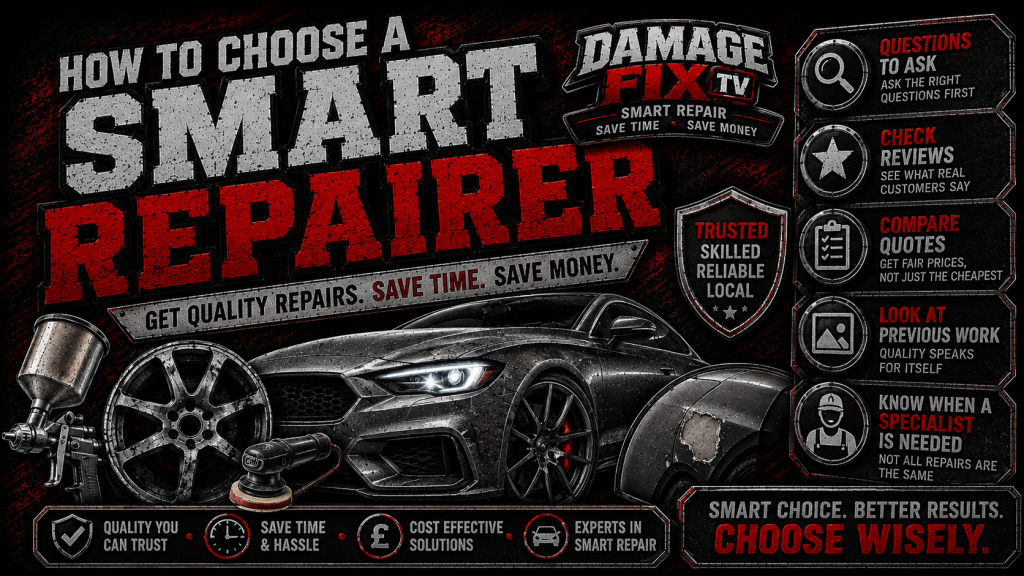
How Do You Choose a Good SMART Repairer?
Choosing a SMART repairer should involve more than searching for the lowest price and booking the first person who can attend.
A skilled repairer may be able to transform a scuffed bumper, scratched panel, kerbed alloy wheel, small dent or worn leather seat. A rushed or unsuitable repair can leave poor colour matching, visible sanding marks, peeling lacquer, returning cracks or damage that costs more to correct later.
The challenge is that many repairers appear similar online. They may all advertise convenient mobile service, professional results and competitive prices. The important differences are often found in their experience, assessment process, preparation, repair methods and willingness to explain what can realistically be achieved.
At Damage Fix, this guide is designed to help you choose a SMART repairer with confidence.
It explains:
- What a SMART repairer does
- How to compare mobile and workshop services
- What photographs and information to provide
- Which questions to ask before booking
- How to assess reviews and previous work
- Why the cheapest quotation may not offer the best value
- What should be included in a written quote
- How to recognise warning signs
- What to check when the repair is complete
- When a bodyshop or specialist may be more appropriate
The aim is not to find someone who promises that every repair will be completely invisible. It is to find someone who gives honest advice, uses an appropriate repair method and sets realistic expectations before taking your money.
What Is a SMART Repairer?
SMART commonly stands for Small to Medium Area Repair Techniques.
A SMART repairer specialises in repairing localised cosmetic vehicle damage rather than automatically replacing a complete component or repainting a much larger area.
Services may include:
- Bumper scuff repair
- Car scratch repair
- Paint-chip repair
- Paintless dent removal
- Minor dent and paint repair
- Alloy wheel repair
- Plastic bumper repair
- Leather seat repair
- Interior trim repair
- Caravan body repairs
- Motorhome cosmetic repairs
- Lease-return preparation
Not every SMART repairer offers every service.
One technician may specialise in mobile paint repairs. Another may focus on paintless dent removal. A dedicated wheel specialist may provide powder coating and diamond cutting, while an interior technician may repair leather, vinyl, fabric and plastic.
The best repairer is therefore not simply the one with the best general reviews. It is the one with the right experience and equipment for your particular type of damage.

Start by Identifying the Type of Repair You Need
Before choosing a repairer, try to understand the general category of damage.
You do not need to diagnose it perfectly, but identifying the main problem will help you contact the right type of specialist.
Paint and Bodywork Damage
This may include:
- Bumper scuffs
- Localised scratches
- Paint transfer
- Small areas of missing paint
- Minor gouges
- Stone chips
- Small dent-and-paint combinations
A mobile paint SMART repairer or local bodyshop may be suitable.
Dents with Undamaged Paint
Small parking dents, trolley dents and shallow creases may be suitable for paintless dent removal.
A dedicated PDR technician will usually be more appropriate than a general paint repairer.
Alloy Wheel Damage
Painted-wheel scuffs may be repaired mobile. Diamond-cut wheels, extensive corrosion, cracks and buckles usually need a specialist refurbishment centre.
Interior Damage
Worn leather, cigarette burns, vinyl tears and scratched plastics require an interior SMART repair specialist.
Caravan and Motorhome Damage
Body panels, GRP, textured aluminium, shower trays and habitation interiors require someone familiar with leisure-vehicle construction.
Choosing the correct type of technician at the beginning can prevent unsuitable repairs and wasted quotations.
Mobile SMART Repairer or Workshop?
Both mobile and workshop SMART repairs can produce excellent results when used for suitable damage.
The better option depends on the job, the working conditions and the equipment required.
When Mobile SMART Repair May Be Ideal
Mobile repair can be convenient for:
- Small bumper scuffs
- Localised scratches
- Minor painted-wheel damage
- Small dents
- Leather bolster repairs
- Interior trim damage
- Lease-return preparation
- Suitable caravan or motorhome repairs
Benefits may include:
- The technician comes to your home or workplace
- You may avoid arranging alternative transport
- Smaller jobs can often be completed within a day
- You can discuss the repair directly with the technician
- Several cosmetic issues may be completed during one visit
A professional mobile repairer should still require a safe and suitable working area.
When a Workshop May Be Better
A workshop may be more appropriate when:
- The repair is large
- Several panels are damaged
- The bumper needs removing
- The paint colour is difficult
- Weather conditions are unsuitable
- Extensive drying or curing is required
- The wheel needs stripping or diamond cutting
- Structural work is involved
- A component requires major dismantling
- Dust and temperature control are especially important
- A complete panel or bumper needs refinishing
A repairer who recommends workshop work rather than forcing a mobile repair may be giving you the more honest advice.
Search for Relevant Experience
General experience matters, but relevant experience matters more.
A technician who regularly repairs bumper corners may be excellent at local paint blending but may not be equipped to repair a cracked alloy wheel or a diamond-cut finish.
Before booking, look for evidence that the repairer regularly completes jobs similar to yours.
Useful evidence includes:
- Before-and-after photographs
- Videos of the repair process
- Examples involving the same damage type
- Work on similar paint colours
- Repairs on similar vehicle materials
- Customer feedback describing the same service
- Clear explanations of the repair method
For caravan or motorhome repairs, look specifically for experience with:
- GRP and fibreglass
- Textured aluminium
- Large white panels
- Plastic corner mouldings
- Decals
- Shower trays
- Water-ingress risks
A collection of excellent car-bumper repairs does not automatically prove experience with motorhome habitation panels.
Examine Before-and-After Photographs Carefully
Repair photographs can be useful, but they should be assessed sensibly.
Look for:
- Similar camera angles before and after
- Consistent lighting
- Images showing the complete panel
- Close-ups as well as wider views
- Clear reflections across the repaired area
- No obvious paint edges
- No visible sanding marks
- Correct panel shape
- Consistent colour and gloss
- Properly refitted trims
Be cautious when every “after” photograph is:
- Taken in poor light
- Shot from a different angle
- Heavily filtered
- Covered in water
- Cropped closely
- Photographed from far away
- Taken before the paint has fully settled
A wet panel can hide sanding marks and paint defects. Bright filters can also make colour matching difficult to judge.
No photograph can prove long-term durability, but a varied and consistent portfolio is still a positive sign.
Read Reviews, but Do Not Rely on the Star Rating Alone
Online reviews can provide useful insight, but the average score does not tell the whole story.
Read the written comments and look for repeated mentions of:
- Communication
- Punctuality
- Honest advice
- Colour matching
- Preparation
- Cleanliness
- Reliability
- Price clarity
- Aftercare
- Problem resolution
- Long-term durability
Pay attention to how the business responds to criticism.
Even a good repairer may occasionally receive a complaint. A calm, professional response that explains the situation and attempts to resolve it can be more reassuring than a business with only vague one-line reviews.
Be cautious when:
- Most reviews were posted within a very short period
- Reviews use nearly identical wording
- There are no details about the work
- The business has changed names repeatedly
- Complaints describe the same failure
- Customers report being ignored after payment
Reviews are one piece of evidence, not a guarantee.
Ask for a Proper Assessment
A good SMART repair begins with an assessment of the damage.
Many repairers can provide an initial quotation from photographs. This is useful, but the quality of the assessment depends on the information supplied.
The repairer should consider:
- Damage size
- Damage depth
- Panel material
- Paint colour
- Repair location
- Previous paintwork
- Nearby sensors or trims
- Access behind the panel
- Working conditions
- Whether the damage is suitable for SMART repair
Be cautious if a repairer gives a firm price without asking any questions or seeing a clear image.
A fast answer is convenient, but it may not be an accurate one.
How to Take Photographs for a SMART Repair Quote
Good photographs help the repairer understand the job and reduce the risk of price changes later.
Send:
- One clear close-up
- One photograph from approximately one metre away
- One wider image showing the full panel or component
- An angled photograph showing depth
- Images taken in natural daylight
- A photograph showing nearby trims, sensors or panel edges
- Pictures of every damaged area
- A short video if the panel is loose or distorted
Also provide:
- Vehicle make
- Vehicle model
- Vehicle year
- Paint colour
- Registration where requested
- Approximate damage dimensions
- Your location
- Whether the vehicle has been repaired there previously
- Whether the damage followed an impact
Do not photograph the vehicle only while it is wet. Water can temporarily hide scratches and paint defects.
Describe the Damage Honestly
Tell the repairer everything you know about the damaged area.
Mention if:
- The bumper is loose
- A sensor is not working
- The damage followed a collision
- The tyre is losing pressure
- A crack is becoming larger
- Rust is visible
- The panel has been repaired before
- DIY products have been applied
- Silicone or touch-up paint is present
- The vehicle has a specialist paint finish
- The damage affects more than one panel
Hiding a previous repair or DIY attempt rarely helps.
The technician may discover it during preparation, at which point the original price and repair plan may no longer be realistic.
Ask Whether the Damage Is Genuinely Suitable for SMART Repair
One of the most important questions is:
“Is SMART repair genuinely the best method for this damage?”
A professional repairer should be willing to explain:
- Why the repair is suitable
- Where the paint will be blended
- Whether the full panel needs refinishing
- Whether a component should be removed
- Whether a workshop would produce a better result
- Whether replacement may be more economical
- What limitations may remain
Be cautious of anyone who claims every repair can be completed quickly and invisibly on a driveway.
Some jobs require a bodyshop, wheel refurbishment centre, trimmer, PDR technician or structural repair specialist.
Knowing when not to accept a job is an important sign of experience.
Questions to Ask a SMART Repairer
You do not need to conduct an interrogation, but several sensible questions can clarify what you are buying.
Ask:
- Is the damage suitable for SMART repair?
- Have you repaired similar damage before?
- Will the work be completed mobile or in a workshop?
- What repair process will you use?
- Does the bumper, wheel or trim need removing?
- Will the full panel be painted?
- How will the colour be matched?
- Are nearby sensors or cameras affected?
- What result should I realistically expect?
- How long will the repair take?
- When can the vehicle be washed?
- Is the work guaranteed?
- Is VAT included?
- Are there likely to be additional charges?
- What happens if hidden damage is found?
- What aftercare is required?
Clear answers should make you more confident. Vague or defensive responses may indicate that the repair has not been assessed properly.
Ask What the Quotation Includes
Two prices can look very different because they cover different levels of work.
One quote may include only a small cosmetic improvement. Another may include removal, crack reinforcement, full preparation, colour blending, refitting and a warranty.
A written quotation should ideally state:
- The damaged area being repaired
- The proposed repair method
- Whether parts will be removed
- Whether the repair is local or full-panel
- Whether paint and materials are included
- Whether VAT is included
- Any call-out charge
- Any travel charge
- Expected repair time
- Payment terms
- Guarantee information
- Possible additional costs
A low headline price is less useful when several extras are added later.
Fixed Price or Estimate?
Some repairs can be priced accurately from photographs. Others may need to be treated as an estimate until the area is inspected or prepared.
An estimate may be reasonable when:
- Hidden bumper damage is possible
- Previous paintwork is present
- Rust may extend beneath the surface
- A wheel may be cracked or buckled
- A dent is difficult to assess from photographs
- Interior material failure is uncertain
- Caravan or motorhome damp is suspected
The important point is transparency.
The repairer should explain which parts of the price are fixed and what could cause it to change.
Check Whether the Repairer Is Properly Insured
A professional repairer should have insurance appropriate to the work being completed.
Depending on the business, this may include cover for:
- Public liability
- Working on customer vehicles
- Driving or moving vehicles
- Mobile repair activities
- Work at business premises
- Accidental damage
- Tools and equipment
You do not necessarily need to request a full insurance document for every small job, but a legitimate repairer should be able to confirm that suitable cover is in place.
This is particularly important when:
- The vehicle is valuable
- The repairer needs to drive it
- Work is being completed at your workplace
- Spraying is involved
- A caravan or motorhome is stored on a managed site
- The repair requires dismantling
Some storage facilities and commercial premises may require proof of insurance before allowing contractors to work.
Understand the Guarantee
A guarantee can provide reassurance, but only when its terms are clear.
Ask:
- What parts of the repair are covered?
- How long does the guarantee last?
- Does it cover paint peeling?
- Does it cover colour or gloss changes?
- Does it cover repaired cracks?
- Are impact damage and stone chips excluded?
- Must the vehicle return to the original repairer?
- Is the guarantee transferable?
- Are mobile call-outs included?
No guarantee can reasonably cover new damage, accidents, kerbing or misuse.
For example, a wheel-repair guarantee would not normally cover the wheel being struck against another kerb.
A verbal promise may be difficult to rely on. Written terms are preferable.
Consider Communication and Professionalism
The repair begins before the technician touches the vehicle.
Good communication may include:
- Responding within a reasonable time
- Asking relevant questions
- Requesting useful photographs
- Explaining the repair clearly
- Confirming the booking
- Arriving when agreed
- Informing you about delays
- Providing written pricing
- Giving aftercare instructions
- Responding if a problem develops
Poor communication does not automatically mean poor technical ability, but it can make problems much harder to resolve.
You should feel that the repairer is interested in understanding the job rather than simply securing a booking.
Is the Repairer Willing to Say No?
One of the strongest signs of a trustworthy repairer is a willingness to decline unsuitable work.
A good technician may say:
- The repair is too large for a local blend
- The bumper should be removed
- A crack needs workshop reinforcement
- The alloy wheel requires specialist inspection
- A full panel would produce a better result
- The colour is unsuitable for a mobile repair
- The damage may be structural
- A replacement part is better value
- The weather conditions are unsuitable
- Another specialist is required
This may initially feel disappointing, especially when you wanted a quick repair.
However, an honest refusal can protect you from a poor-quality or unsafe result.
Do Not Choose on Price Alone
Price is important, but it should be considered alongside:
- Repair method
- Experience
- Materials
- Preparation
- Expected result
- Convenience
- Guarantee
- Communication
- Relevant reviews
- Long-term durability
The cheapest quotation may be perfectly suitable for a simple repair. It becomes a concern when it is significantly lower than all others and the repairer cannot explain why.
A low price may reflect:
- A smaller repair area
- Less dismantling
- Fewer preparation stages
- Cheaper materials
- No VAT
- No guarantee
- A temporary cosmetic improvement
- Work carried out in unsuitable conditions
Compare quotations on a like-for-like basis.
Why Preparation Matters
Much of a successful SMART repair happens before the colour or final coating is applied.
Proper preparation may involve:
- Cleaning
- Degreasing
- Removing silicone
- Sanding
- Feathering paint edges
- Treating corrosion
- Repairing cracks
- Applying adhesion promoter
- Priming
- Masking
- Checking colour
- Removing previous poor repairs
Preparation is not always visible in the finished result, but it has a major effect on durability.
A rushed repair may look acceptable initially and then develop:
- Peeling
- Sinkage
- Cracking
- Paint reactions
- Visible sanding marks
- Corrosion
- Poor adhesion
Ask what preparation is required rather than focusing only on how quickly the repair can be finished.
Colour Matching and Paint Blending
Modern vehicle colours can be complex.
The paint code is a starting point, but vehicles may vary because of:
- Factory shade variations
- Age
- Sun exposure
- Previous paintwork
- Metallic particle orientation
- Pearlescent layers
- Different panel materials
A skilled repairer may use:
- Paint-code information
- Colour chips
- Spray-out cards
- Electronic colour reading
- Visual tinting
- Controlled blending
A professional should not promise a perfect match merely because they have the paint code.
Good colour matching depends on preparation, experience and the way the paint is applied.
Be Realistic About “Invisible” Repairs
Many SMART repairs can be extremely difficult to notice.
However, an entirely invisible result cannot be guaranteed in every situation.
The outcome may be affected by:
- Paint colour
- Damage position
- Surface texture
- Previous repairs
- Faded paint
- Panel shape
- Material distortion
- Repair size
- Lighting
- Viewing angle
A trustworthy repairer should explain whether the expected result will be:
- Virtually unnoticeable
- A very strong cosmetic improvement
- Slightly visible under close inspection
- Better achieved through full-panel repair
- Unsuitable for local repair
Be wary of absolute promises made before the damage has been inspected.
Choosing a Bumper Repairer
For bumper scuffs and scratches, ask:
- Is the damage only cosmetic?
- Is the bumper cracked or distorted?
- Are mounting tabs broken?
- Are sensors or radar units nearby?
- Will flexible materials be used?
- Does the bumper need removing?
- Will the repair be local or full-bumper?
- How will the paint be blended?
For cracked bumpers, the repair should normally address the back of the crack rather than simply filling the visible surface.
Choosing a Paintless Dent Repairer
For PDR, look for evidence of specialist dent-repair work.
Ask:
- Is the paint still suitable for PDR?
- Can the dent be accessed from behind?
- Will glue pulling be required?
- Does the dent cross a body line?
- Is the panel aluminium?
- Has the panel been painted before?
- What level of improvement is realistic?
- Will trims need removing?
PDR is a skilled process. A large shallow dent may be easier than a small sharp one, so price should not be judged only by diameter.
Choosing an Alloy Wheel Repairer
First identify whether the wheel is:
- Painted
- Powder coated
- Diamond cut
- Polished
- Matt
- Structurally damaged
Ask:
- Is this a local repair or full refurbishment?
- Will the tyre be removed?
- Is balancing included?
- Are valves included?
- Is the wheel checked for cracks and buckles?
- Is CNC machining required?
- How many times has the wheel been diamond cut?
- Is the finish matched to the other wheels?
Cracks and buckles require a structural assessment rather than a cosmetic mobile repair.
Choosing an Interior SMART Repairer
Interior repairs require accurate colour, texture and sheen matching.
Ask:
- What material is being repaired?
- Is it genuine leather, vinyl or artificial leather?
- Will the repair remain flexible?
- Can the grain be reproduced?
- Is the damage near an airbag seam?
- Is panel replacement more durable?
- How long before the seat or trim can be used?
- What cleaning products should be avoided?
Look for examples involving the same material and colour.
A repair that looks good in a photograph may feel hard, sticky or uneven in person, so product choice and preparation matter.
Choosing a Caravan or Motorhome Repairer
Leisure vehicles require specialist knowledge beyond ordinary car bodywork.
Ask:
- Do you regularly repair caravans or motorhomes?
- What material is the panel?
- Could water ingress be present?
- Can the texture be reproduced?
- Will seals or rails be disturbed?
- How will weatherproofing be restored?
- Can decals be matched?
- Is the repair structural or cosmetic?
- Are you insured to work at the storage site?
- Does the repair require workshop access?
A cosmetic repair should never conceal damp, failed seals or structural damage.
Watch for Common Warning Signs
Possible warning signs include:
- The repairer promises every job will be invisible
- No photographs or inspection are requested
- The quotation is unclear
- The price changes repeatedly
- VAT status is avoided or misrepresented
- No business details are provided
- There is no relevant repair portfolio
- Reviews repeatedly mention failures
- Rust will simply be painted over
- A cracked bumper will only be filled from the front
- Safety systems are ignored
- Poor weather is dismissed as irrelevant
- Full payment is demanded unusually far in advance
- The repairer refuses to explain the method
- There is pressure to book immediately
- No aftercare is provided
One concern may have an innocent explanation. Several together should encourage caution.
Deposits and Payment
Some repairers request a deposit to confirm a booking or order materials. This can be reasonable, especially for larger jobs or specialist parts.
Before paying, confirm:
- The business name
- The repair date
- The work being booked
- The total price
- The deposit amount
- Whether the deposit is refundable
- What happens if weather prevents the repair
- What happens if you cancel
- Which payment methods are accepted
Avoid paying the complete amount in advance without a clear reason and written confirmation.
Request an invoice or receipt when appropriate.
Preparing the Vehicle for the Repair
The repairer may ask you to:
- Wash the vehicle
- Leave the damaged area free from wax
- Remove personal belongings
- Provide keys
- Move the vehicle to a suitable space
- Ensure access to electricity
- Keep pets and children away
- Avoid applying silicone products
- Remove valuables from the interior
- Inform site management
Follow the repairer’s instructions.
Do not polish, touch in or apply trim dressing immediately before the appointment unless asked. These products can contaminate the repair area.
What to Check Before the Repair Begins
When the repairer arrives or receives the vehicle, confirm:
- The exact damaged areas
- The agreed price
- The expected result
- Any existing marks nearby
- Whether parts will be removed
- The estimated completion time
- Payment method
- Aftercare expectations
- What happens if hidden damage is found
Take your own photographs before work starts.
This protects both you and the repairer by recording the condition of the vehicle.
What to Check When the Repair Is Finished
Inspect the repair before making final payment where practical.
Look at the area:
- From close range
- From several metres away
- From different angles
- In natural light
- With reflections across the surface
Check for:
- Colour consistency
- Correct gloss
- Visible paint edges
- Sanding marks
- Dirt in the finish
- Overspray
- Correct panel shape
- Secure trims
- Proper panel gaps
- Working sensors
- Correctly fitted wheels
- Interior colour and texture match
Do not expect fresh paint to be polished or washed aggressively immediately.
Some small marks may disappear during final polishing, and coatings can continue curing after the vehicle is returned.
Ask the repairer to explain anything you are unsure about.
Aftercare Instructions
A professional repairer should provide clear aftercare guidance.
You may be advised to avoid:
- Washing the vehicle for a short period
- Pressure washing the repaired area
- Applying wax or ceramic coating
- Using strong chemicals
- Automatic car washes
- Sitting on a repaired leather seat immediately
- Driving on a refurbished wheel before curing
- Flexing a repaired plastic component
Follow the specific advice given.
The correct aftercare depends on the materials and repair method.
What If You Are Unhappy with the Repair?
Raise concerns promptly and calmly.
Take clear photographs and explain:
- What you believe is wrong
- When you noticed it
- Whether the problem is changing
- Whether aftercare instructions were followed
- What resolution you are seeking
Give the repairer a reasonable opportunity to inspect and address the issue.
Many problems can be resolved through correction, polishing or further preparation.
Keep:
- The quotation
- Invoice
- Messages
- Photographs
- Guarantee information
- Payment records
A professional business should have a process for dealing with genuine concerns.
A Simple SMART Repairer Checklist
Before booking, check whether you can answer yes to most of the following:
- Does the repairer specialise in the type of damage?
- Have you seen relevant examples?
- Are the reviews detailed and credible?
- Has the damage been assessed properly?
- Is the repair method explained?
- Is the quotation clear?
- Is VAT included or clearly stated?
- Are possible extras explained?
- Is suitable insurance in place?
- Is a guarantee offered?
- Are realistic expectations being set?
- Are safety systems being considered?
- Is mobile repair suitable for the job?
- Have alternative options been discussed?
- Do you feel comfortable asking questions?
You do not need perfection in every category, but uncertainty across several areas may justify obtaining another quotation.
Should You Get More Than One Quote?
For a straightforward, low-cost repair from a trusted local technician, one quotation may be enough.
Multiple quotations can be useful when:
- The repair is expensive
- Different methods are possible
- Replacement is being considered
- The damage is unusual
- Structural issues may be present
- A wheel is cracked
- The paint colour is difficult
- Caravan or motorhome work is involved
- Recommendations differ significantly
Do not automatically choose the middle or lowest price.
Compare:
- What is being repaired
- How it will be repaired
- What is included
- Expected finish
- Guarantee
- Timescale
- Relevant experience
A larger quote may reflect a more complete repair rather than overcharging.
Final Thoughts: How Do You Choose the Right SMART Repairer?
The right SMART repairer should combine relevant skill, honest assessment, clear communication and realistic expectations.
Look for someone who:
- Understands your type of damage
- Can show similar work
- Asks sensible questions
- Explains the repair method
- Provides clear pricing
- Uses appropriate materials
- Considers safety systems
- Recommends workshop work when needed
- Is willing to refuse unsuitable repairs
- Provides aftercare and support
Do not choose solely on convenience, speed or the lowest quotation.
A proper SMART repair should save time and money without sacrificing preparation, safety or durability.
At Damage Fix, our aim is to help vehicle owners understand the repair before booking it. The best repairer is not necessarily the one who promises the most. It is the one who explains the options honestly and chooses the method most likely to produce a lasting result.
Video Coming Soon
The video accompanying this guide will explain how to assess and compare SMART repairers using real quotations, repair examples and finished work.
Planned topics include:
- How to describe vehicle damage
- Taking useful quotation photographs
- Comparing mobile and workshop repairs
- Questions to ask
- Checking previous work
- Reading reviews properly
- Comparing quotations
- Insurance and guarantees
- Warning signs
- Inspecting a completed repair
- Handling problems
- When to choose a bodyshop or specialist
Personal Industry Input Coming Soon
This section will include honest observations and practical advice from more than 30 years within the SMART repair industry.
Future additions may cover:
- The questions experienced repairers ask before quoting
- Why one poor photograph is rarely enough
- Common signs of an unsuitable repair plan
- When the cheapest quote should raise concern
- Why some technicians specialise rather than offering everything
- How to recognise good preparation
- What customers often forget to mention
- Why a repairer may change the price after inspection
- How to judge before-and-after photographs
- When mobile work is not appropriate
- What to look for when collecting the vehicle
- How professional repairers handle complaints
Frequently Asked Questions
How do I find a good SMART repairer?
Look for relevant experience, detailed reviews, clear before-and-after examples, proper assessment, written pricing and honest explanations of what can realistically be achieved.
Should I use a mobile SMART repairer or a bodyshop?
Mobile repair can be ideal for smaller localised damage. Larger paint repairs, structural work, difficult colours and jobs requiring dismantling may be better completed in a workshop.
Should I get several SMART repair quotes?
It can be useful for expensive, unusual or complex damage. Compare the proposed repair methods and inclusions rather than choosing only by price.
What photographs should I send for a quote?
Send close-up, medium-distance and wider photographs in daylight, plus angled images showing depth and nearby trims, sensors or panel edges.
Is the cheapest SMART repair quote the best?
Not necessarily. A cheaper quote may involve less preparation, a smaller repair area, fewer materials or no guarantee. Compare like for like.
Should a SMART repairer provide a written quote?
A written quote or clear written confirmation is advisable, especially for larger jobs. It should explain the repair area, method, price and possible extras.
Do SMART repairs come with a guarantee?
Many professional repairers offer guarantees, but the length and coverage vary. Ask for the terms before booking.
Should a SMART repairer have insurance?
Yes. The repairer should have cover appropriate to working on customer vehicles and operating at homes, workplaces or commercial sites.
Can a SMART repairer guarantee an invisible result?
A high-quality repair can be extremely difficult to notice, but no repairer can reasonably guarantee perfection in every colour, location and material before assessing the damage.
How can I check a repairer’s previous work?
Review their website, social pages, videos and customer photographs. Look for work involving the same type of damage rather than only general examples.
What should be included in a SMART repair quote?
The quote should identify the repair, method, price, VAT position, likely extras, timescale and whether removal, refitting and materials are included.
Why might a repairer refuse my job?
The damage may be too large, structural, unsafe, unsuitable for mobile work or unlikely to produce a durable result using SMART techniques.
Should I tell the repairer about previous repairs?
Yes. Previous paintwork, filler, touch-up products and DIY repairs can affect the process, price and result.
How do I inspect a finished SMART repair?
View it in good light from different distances and angles. Check colour, gloss, reflections, panel shape, overspray, trim fit and sensor operation.
What should I do if I am unhappy with the repair?
Contact the repairer promptly, provide photographs and allow them an opportunity to inspect and correct the issue under any agreed guarantee.
Suggested Internal Links
- What Is a SMART Repair?
- SMART Repair Near Me
- Mobile SMART Repair Near Me
- When Is a SMART Repair Not Suitable?
- Bumper Scuff Repair Guide
- Plastic Bumper Repair Guide
- Car Scratch Repair Guide
- Dent Repair Guide
- Alloy Wheel Repair Guide
- Interior Trim Repair Guide
- Lease Car Return Damage Guide
- Caravan SMART Repair Guide
- Motorhome SMART Repair Guide
- Find SMART Repair Advice
- Find a SMART Repairer
- Add Your SMART Repair Business
- Watch Damage Fix TV